




🌄 Introduction – Welcome to Bhutan
In the landlocked Himalayan nation of Bhutan, tradition, spirituality, and scenic beauty coexist. This tranquil country, which lies between China and India, rejects mass tourism and adheres to the Gross National Happiness theory. Bhutan provides visitors with a genuine experience through prayer flags, mountain trails, and friendly locals, from the revered Tiger’s Nest Monastery perched on cliffs to vibrant festivals in historic dzongs. Bhutan is a place that connects, heals, and inspires with its pristine valleys, rich Buddhist heritage, and lively cultural celebrations.
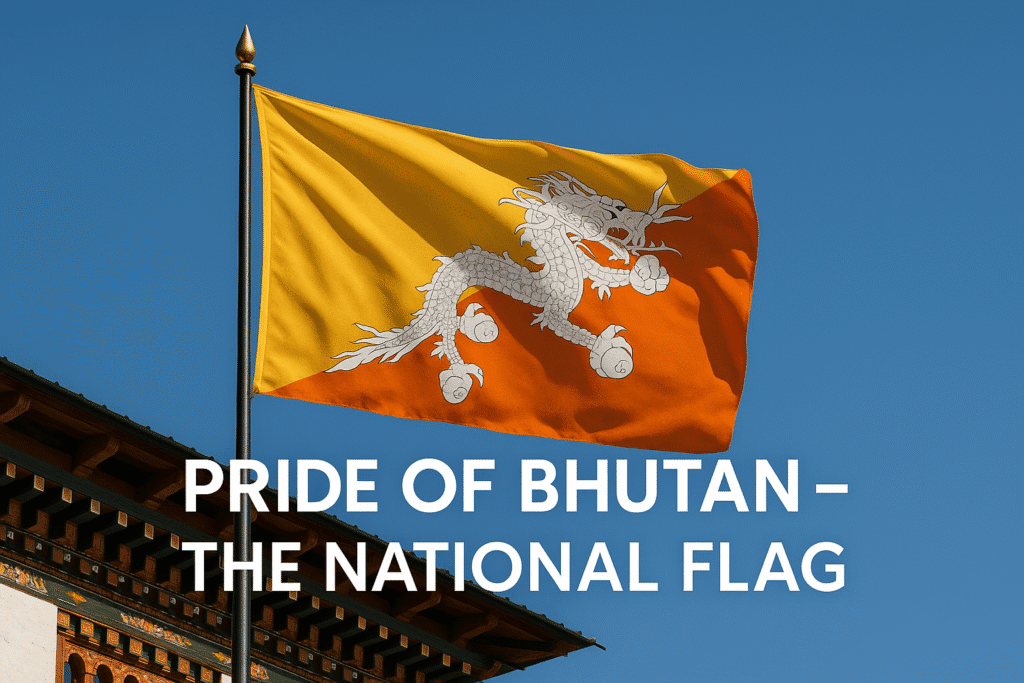
🕰️ 1. Historical Overview of Bhutan
Unification under Shabdrung Ngawang Namgyal
Shabdrung Ngawang Namgyal united Bhutan in the 17th century by constructing famous dzongs (fortresses) and instituting a dual system of government that combined temporal and spiritual authority.
The Wangchuck Dynasty
Stability was introduced in 1907 with the founding of the Wangchuck monarchy. Bhutan has progressively modernised since then, leading to King Jigme Khesar Namgyel Wangchuck’s 2008 transition to a constitutional monarchy.
Himalayan Conservation & GNH
Bhutan became the first carbon-negative nation thanks to early conservation initiatives and constitutional environmental protections. The idea of Gross National Happiness emphasises balanced development that prioritises environmental sustainability, cultural preservation, and sound governance.
🗺️ 2. Geography & Location
- Continent: Asia
- Region: South Asia, Eastern Himalayas
- Coordinates: Approx. 27.5° N, 90.5° E
- Borders: India (west, south, east), China/Tibet (north)
- Landscape: Rugged Himalayas, forested valleys, alpine meadows
- Climate Zones: Subtropical south to alpine highlands, monsoon-influenced
🎭 3. Culture, Religion & Festivals
Vajrayana Buddhism
The majority of people in Bhutan are Vajrayana Buddhists. Religious life plays a major role in daily life, and monasteries and temples are adorned with elaborate paintings and prayer wheels.
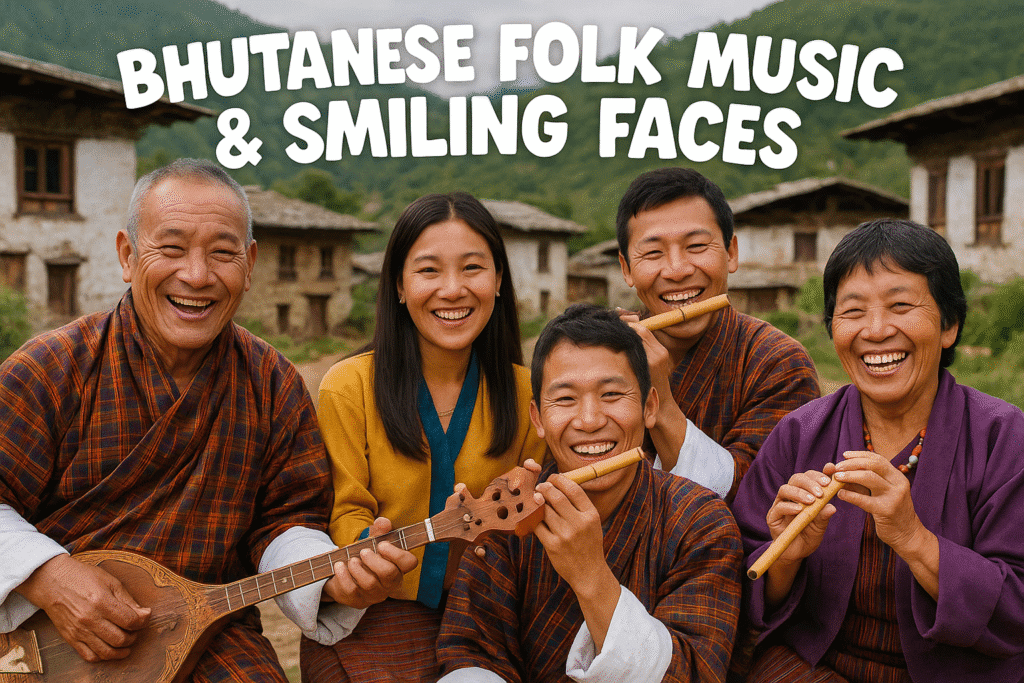
Festivals (Tsechus)

- Thimphu and Paro Tsechu: Mask dances and Dzong folklore rites
- Lunar New Year (Losar): Local communities celebrate the holiday
- The Phobjikha Valley’s Black-Necked Crane Festival honours migratory birds.
Arts, Crafts & Clothing
Traditional crafts like wood carving, weaving, and thangka painting are valued. Every day and at festivals, the national attire—kira for women and gho for men—is proudly worn.
Cuisine

Red rice, which goes well with regional meats and vegetables, and the well-known chilli and cheese dish Ema Datshi are two of Bhutanese cuisine’s highlights.
💰 4. Economy, Currency & Trade
- Currency: The Indian Rupee is linked to the Bhutanese Ngultrum (Nu).
- Important Sectors: Cottage Industries, Tourism, Agriculture, and Hydropower Exports
- Trade Partners: Thailand, Bangladesh, India (primary), and expanding relations with the EU
- Sustainable tourism is a high-value, low-impact travel strategy that charges visitors a fee of about $200 per day.
🌄 5. Main Tourist Attractions
Tiger’s Nest Monastery (Paro Taktsang)
An emblem of Bhutanese spirituality, this holy cliffside sanctuary is accessible by picturesque walk.
Punakha Dzong

Historically, Bhutan’s capital and the location of important festivals is this magnificent fortress at the meeting point of two rivers.
Thimphu City
Tashichho Dzong, the Buddha Dordenma statue, and bustling weekend markets can all be found here.
Phobjikha Valley
The rare black-necked crane’s winter habitat is a glacial valley.
Dochula Pass
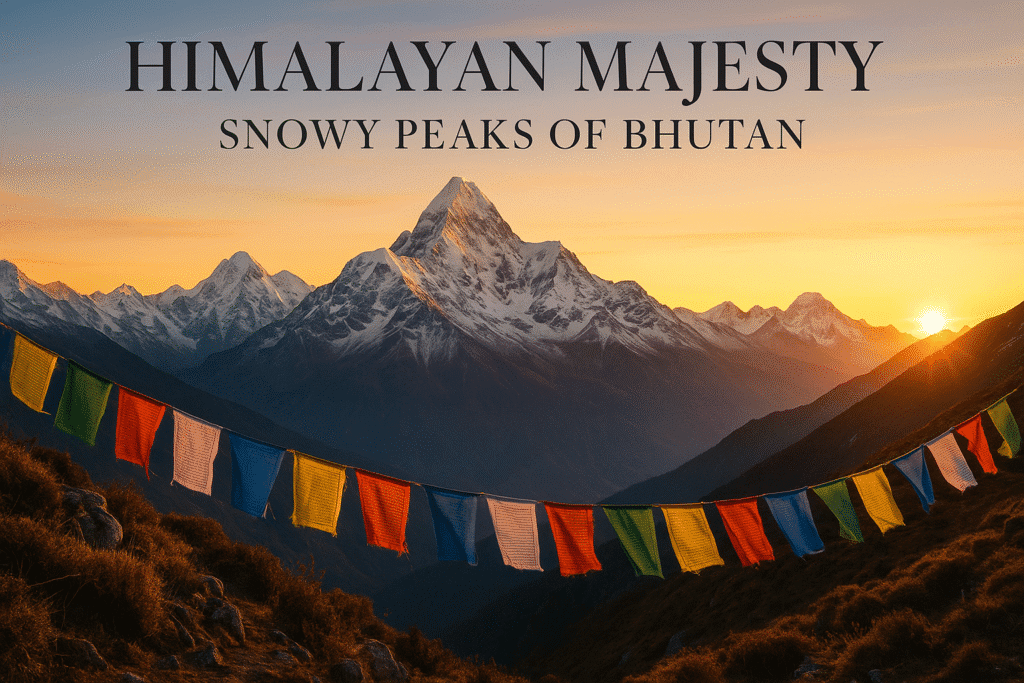
renowned for its expansive Himalayan views and 108 memorial chortens.
🗣️ 6. Official Languages & Dialects
- Official Language: Dzongkha
- Spoken Dialects: Sharchhop in east, Lhotshampa in south, and various regional dialects
- English: Widely used in schools, business, and tourism
🧠 7. Unique & Fascinating Facts About Bhutan
- Gross National Happiness (GNH): Bhutan uses well-being, not GDP, to gauge progress. This model places a strong emphasis on good governance, environmental preservation, cultural values, and sustainable development.
- Bhutan is a carbon-negative nation because of its protected forests and hydropower, which allow it to absorb more CO₂ than it releases.
- Internet and TV Launched in 1999: The kingdom was among the last countries to implement internet and television services.
- No Traffic Lights: Police use hand signals to control traffic, even in Thimphu, the capital.
- High Literacy & Education in English & Dzongkha: Bhutan’s dual-language system fosters international communication as well as cultural identity.
🌐 8. Bhutan’s Global Participation: UN & Beyond
In 1971, Bhutan joined the United Nations. Additionally, it works with:
- The South Asian Association for Regional Cooperation, or SAARC,
- World Bank – Bhutan Country Overview
- Many of its monasteries and dzongs are listed by UNESCO as UNESCO tentative list
Bhutan maintains sovereignty, neutrality, and non-alignment in international relations.
🏙️ 9. Major Cities & Regions
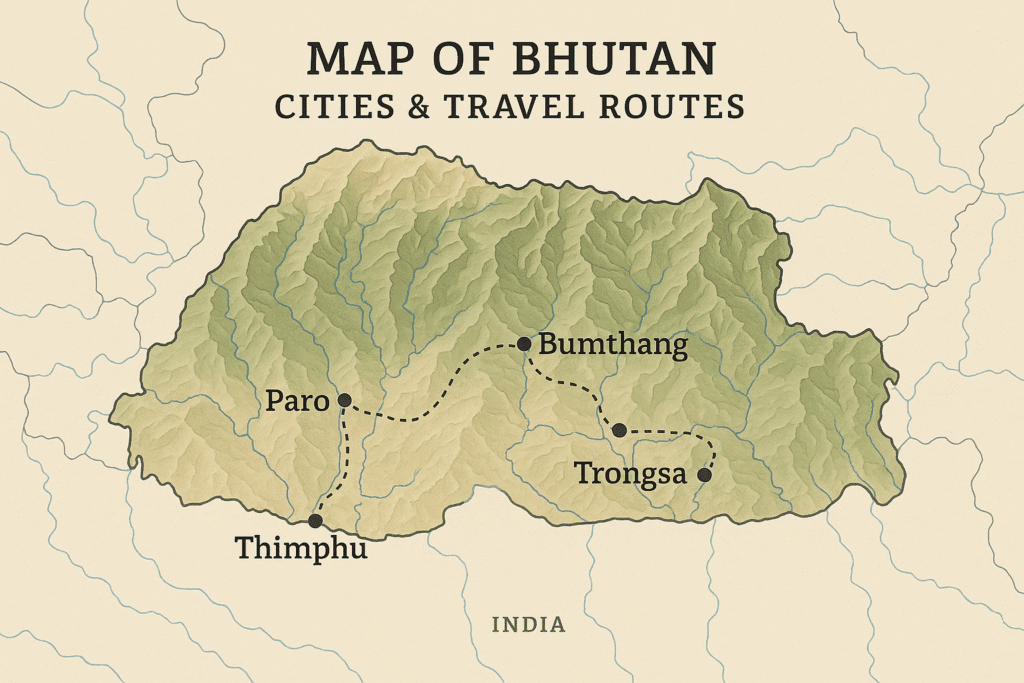
Thimphu – The Capital
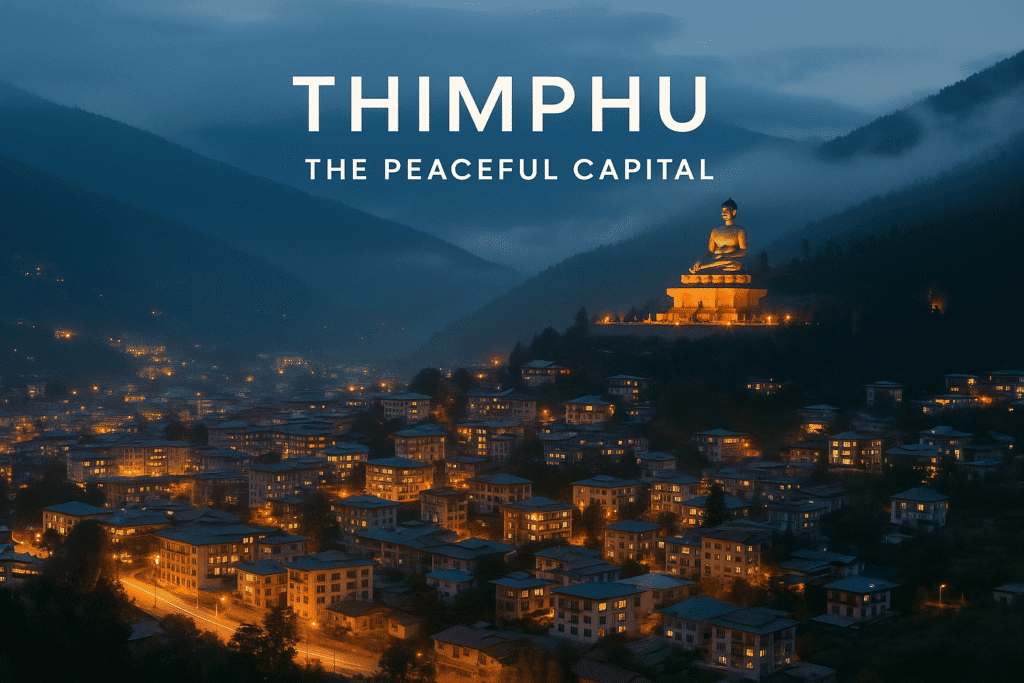
Thimphu, tucked away in the Himalayas, is a singular fusion of modernity and tradition. See the Folk Heritage Museum, National Memorial Chorten, and Buddha Dordenma.
Paro
Paro International Airport serves as the country’s entry point. is home to Paro Dzong and the famous Tiger’s Nest Monastery.
Punakha
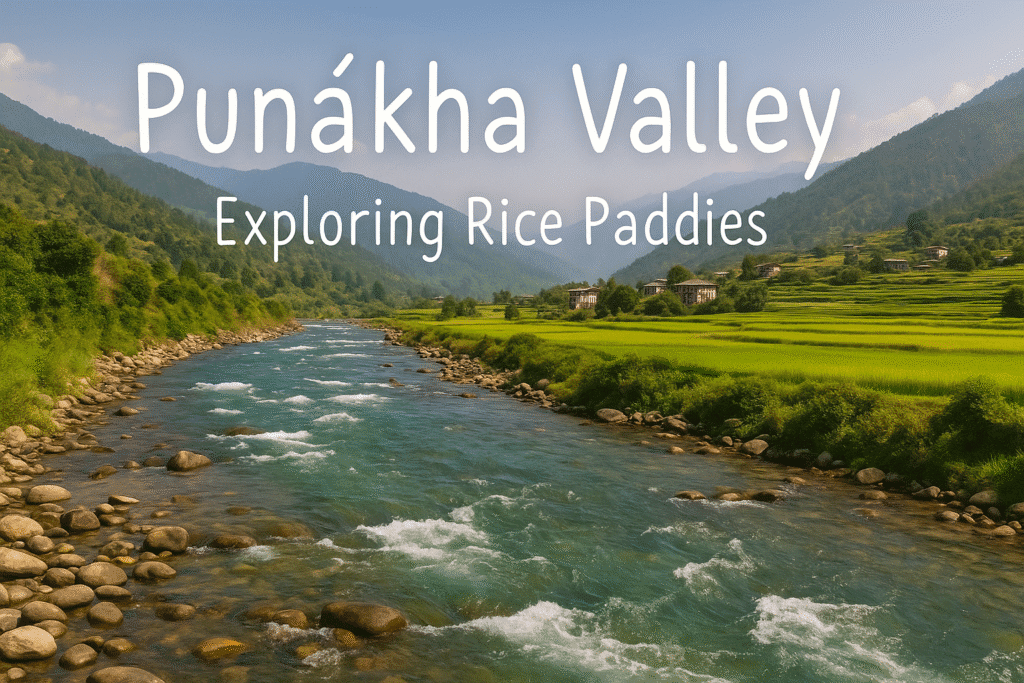
A spiritual hub and historic winter capital, Punakha Dzong is surrounded by picturesque river valleys.
Bumthang
serene valley scenery and historic temples in this spiritual heartland.
Phuentsholing
An entry point for road travellers, this commercial hub is located close to the Indian border.
🗓️ 10. Best Time to Visit Bhutan
- Spring (March–May): Paro Tsechu and rhododendron blooms.
- Clear skies and cultural events like Thimphu Tsechu are features of the autumn season (September to November).
- Winter (December to February): Better Himalayan views and more tranquil travel.
- Monsoon (June–Aug): Travel disruptions are likely, but there is lush greenery.
🚐 11. Getting Around Bhutan
Flights
The only international airport in Bhutan is Paro International Airport. Cities in India, Nepal, Thailand, and Singapore are served by Druk Air and Bhutan Airlines.
Road Travel
All travel for tourists must be planned through authorised Bhutanese tour operators. Major towns are connected by well-paved roads. Typical routes of travel include:
- Thimphu → Punakha
- Paro → Haa Valley
- Bumthang → Trongsa

Entry Requirements
Except for those travelling from Bangladesh, India, and the Maldives, visitors must:
- Use a certified Bhutanese tour operator to make your reservation.
- The Sustainable Development Fee (SDF) must be paid.
- Get a visa to Bhutan beforehand.
📌 Summary: Why Visit Bhutan?
Bhutan is a serene Himalayan nation where prayer flags welcome you at sunrise and spiritual landscapes accompany every journey. Bhutan offers a mindful journey in addition to a vacation, thanks to its distinctive Gross National Happiness philosophy. Bhutan will lift your spirits, slow down your pace, and increase your appreciation of culture and nature, whether you’re dancing at a Tsechu festival, hiking misty trails, or meditating in ancient temples.
📋 Bhutan at a Glance – Key Facts
| Feature | Detail |
| Continent | Asia (South Asia) |
| Capital City | Thimphu |
| Official Language | Dzongkha |
| Currency | Bhutanese Ngultrum (Nu) |
| Population (2024 est.) | ~780,000 |
| Religion | Vajrayana Buddhism |
| Government Type | Constitutional Monarchy |
| Time Zone | BTT (UTC +6) |
| Famous Sites | Tiger’s Nest, Punakha Dzong, Phobjikha Valley |
| UNESCO Status | Tentative list for several dzongs/monasteries |
- United Nations – Member States Profile
👉 https://www.un.org/en/about-us/member-states/bhutan
confirms Bhutan’s general overview and membership in the UN. - UNESCO – Bhutan World Heritage Tentative List
👉 https://whc.unesco.org/en/statesparties/bt
Bhutan’s official submission of a list of cultural and natural sites. - World Bank – Bhutan Country Overview
👉 https://www.worldbank.org/en/country/bhutan
Information about Bhutan’s sustainability, development objectives, and economic growth. - National Statistics Bureau of Bhutan
👉 https://www.nsb.gov.bt/
for the most recent government, demographic, and population data. - Tourism Council of Bhutan – Official Website
👉 https://www.bhutan.travel/
Comprehensive travel resources, visa regulations, information about eco-friendly travel, and ideas for itineraries. - Gross National Happiness Commission (GNHC)
👉 https://www.gnhc.gov.bt/
Learn about the distinctive Gross National Happiness development model used in Bhutan.. - Druk Air – Royal Bhutan Airlines
👉 https://www.drukair.com.bt/
Bhutan’s national airline: flights, connections, and travel information.
Lonely Planet – Bhutan Travel Guide
👉 https://www.lonelyplanet.com/bhutan
An independent travel guide featuring reviews, highlights, and helpful advice.