




Introduction: The Allure of Cambodia
A stunning blend of historic temples, cultural diversity, and resilient modern development greets visitors to Cambodia, a country tucked away in Southeast Asia. Cambodia beckons with its heart and history, from the famous spires of Angkor Wat to the bustling streets of Phnom Penh. Cambodia invites exploration at every turn, whether it is its culinary traditions, illustrious past, or forward-thinking advancements.
History That Shapes the Land
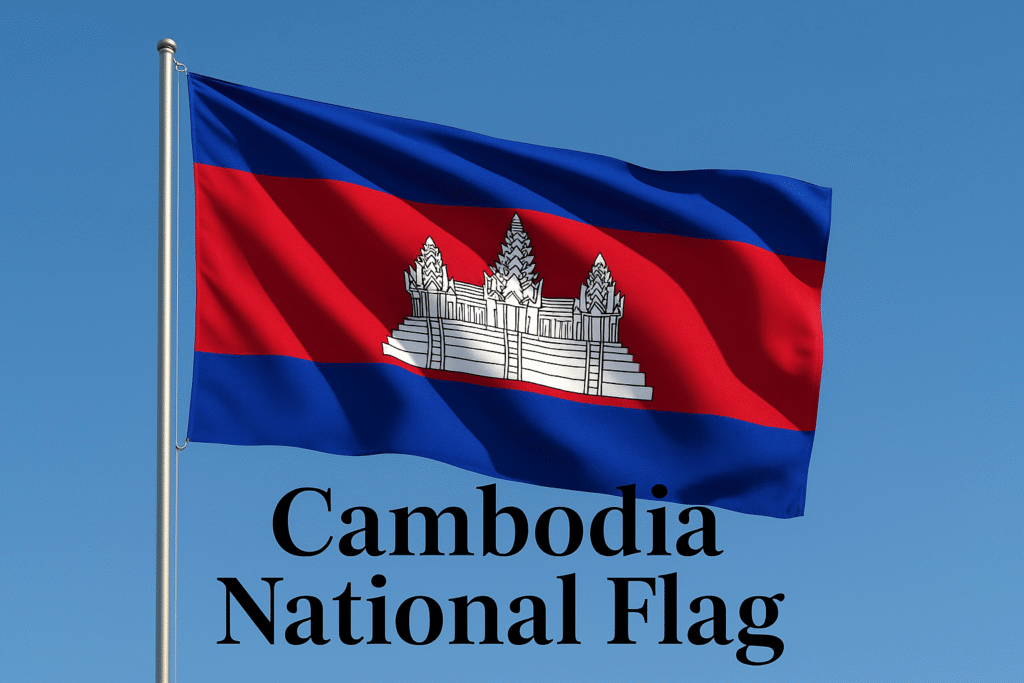
A Kingdom from the Ancient Past
Cambodia’s origins date back to 802 AD, when Jayavarman II brought the Khmer princes together to form the Khmer Empire, a civilisation renowned for its hydraulic prowess and temple wonders, including the magnificent Angkor Wat. (Wikipedia).
Colonization, Conflict, and Independence
French colonial rule began in the 19th century, influencing both culture and infrastructure. On November 9, 1953, Cambodia gained its independence. Despite the devastating effects of the Khmer Rouge’s rule (1975–1979), the country gradually recovered stability and rebuilt through peace agreements. (Wikipedia).
Geography and Surrounding Nations
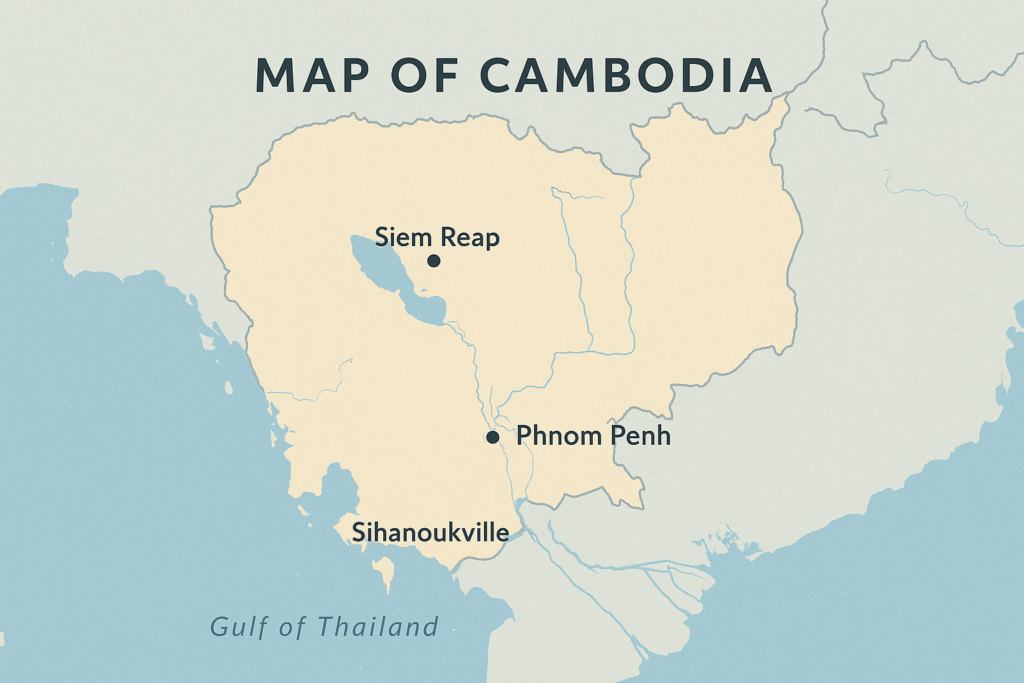
Cambodia is a country in mainland Southeast Asia that shares borders with Vietnam to the east, Laos to the north, and Thailand to the west and north-west. It also faces the Gulf of Thailand to the southwest. With Phnom Penh situated at roughly 11°33′ N, 104°55′ E, it spans roughly 181,035 km² and includes the Tonlé Sap basin and Mekong River. (Wikipedia, UNdata).
Culture: Festivals
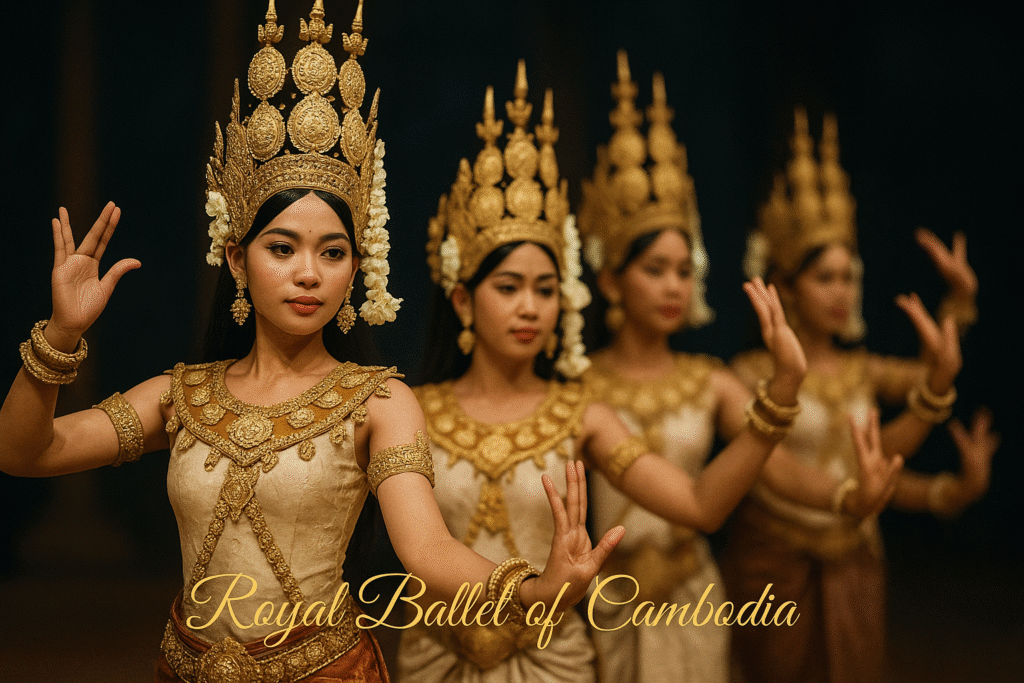
For 95–97% of Cambodians, Buddhism permeates every aspect of their lives, influencing social values, festivals, and daily routines. Temple courtyards reverberate with celebrations such as Pchum Ben, the Water Festival, and Khmer New Year. While traditional dances like Apsara and musical instruments like the roneat and chapei preserve artistic heritage, cuisine combines aromatic spices, as in Fish Amok and Kuy Teav.
Food
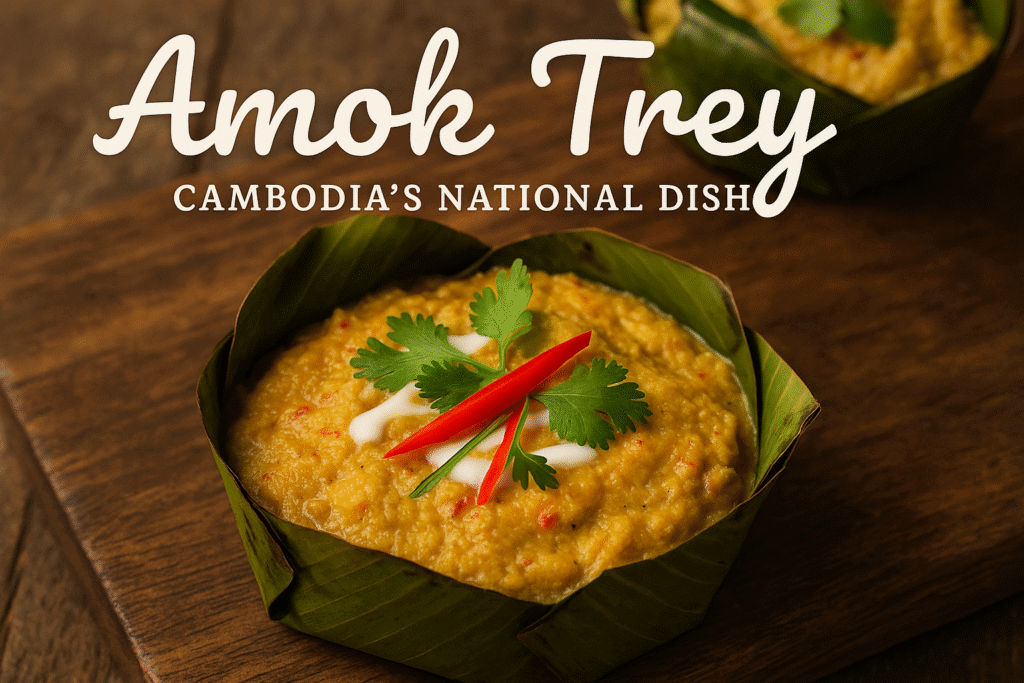
Music
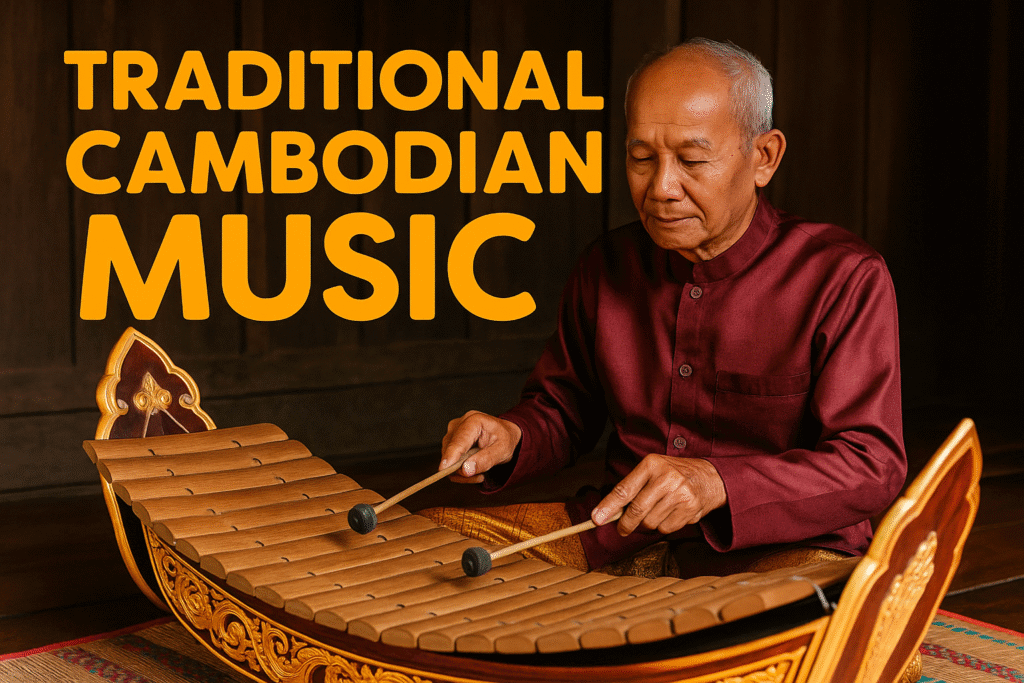
Economy: Growth, Currency, and Trade
Growth Trends
From US $18 billion in 2015 to about US $29.5 billion in 2024, Cambodia’s GDP has grown significantly, and its per capita income has increased to about $1,760. (UNdata, World Bank). In 2024, post-pandemic recovery rates were approximately 5.3%; however, current projections indicate that growth will be approximately 4% in 2025.(World Bank, B2B Cambodia).
Economic Sectors & Currency
Millions are employed in agriculture, which accounts for 23.7% of GDP; the remainder is made up of industry and services, with clothing and tourism accounting for the majority of exports.(UNdata, Wikipedia).Although the US dollar is also frequently used, the Riel (KHR) is the official currency. (UNdata).
Trade and Future Strategy
Cambodia engages in substantial trade with Thailand, Vietnam, China, and the United States. By 2050, the government’s Pentagonal Strategy seeks to increase growth to high-income status, diversify economies, and enhance governance. (Wikipedia).
Tourism: Ancient, Modern, and Natural Wonders
Visitor Surge
In 2024, there were roughly 6.7 million foreign arrivals, a 22.9% increase over 2023.(Wikipedia).
Top Attractions
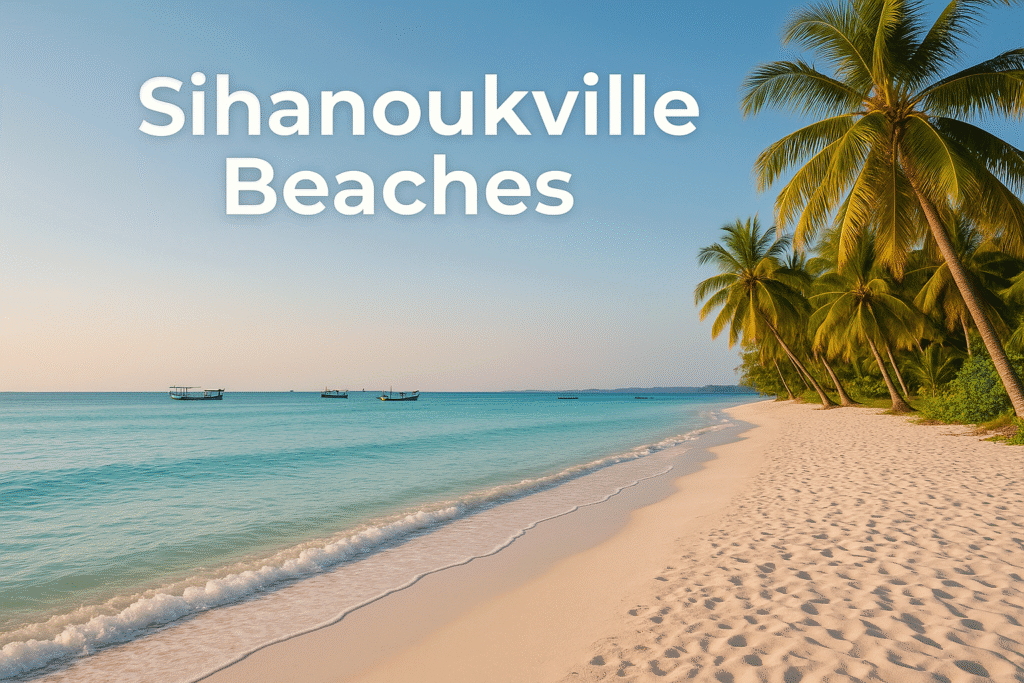
Cambodia’s tourism attraction is Angkor Wat and the temples that surround it. Historical sites like the Royal Palace and genocide memorials can be found in Phnom Penh. Tropical getaways can be found on islands like Koh Rong and beaches like Sihanoukville. Indigenous communities in Mondulkiri and Ratanakiri also benefit greatly from ecotourism.
Improved Access
Travel capacity will reach 13 million passengers and more with the opening of Siem Reap–Angkor Airport in 2023 and the planned Techo International Airport close to Phnom Penh in 2025. (Wikipedia).
Language and Ethnicity
Over 95% of people speak Khmer, which is the official language. Cham, Chinese, and Vietnamese are minority languages; French and English are becoming more and more common in tourism and education. (Wikipedia, UNdata).
Unique Facts You Should Know
- Angkor Wat is a distinctive feature of the Cambodian flag.
- Seasonally, the Tonlé Sap River reverses.
- The endangered Irrawaddy dolphins can be found in the Mekong River.
- About 96% of the population is Khmer.
- By 2027, Cambodia hopes to leave the UN’s list of Least Developed Countries. (Wikipedia, UNdata).
International Memberships and Role
In addition to being a member of ASEAN, the World Bank, UNESCO, and the WTO, Cambodia joined the UN on December 14, 1955. (UNdata, Wikipedia).
Major Urban Centers
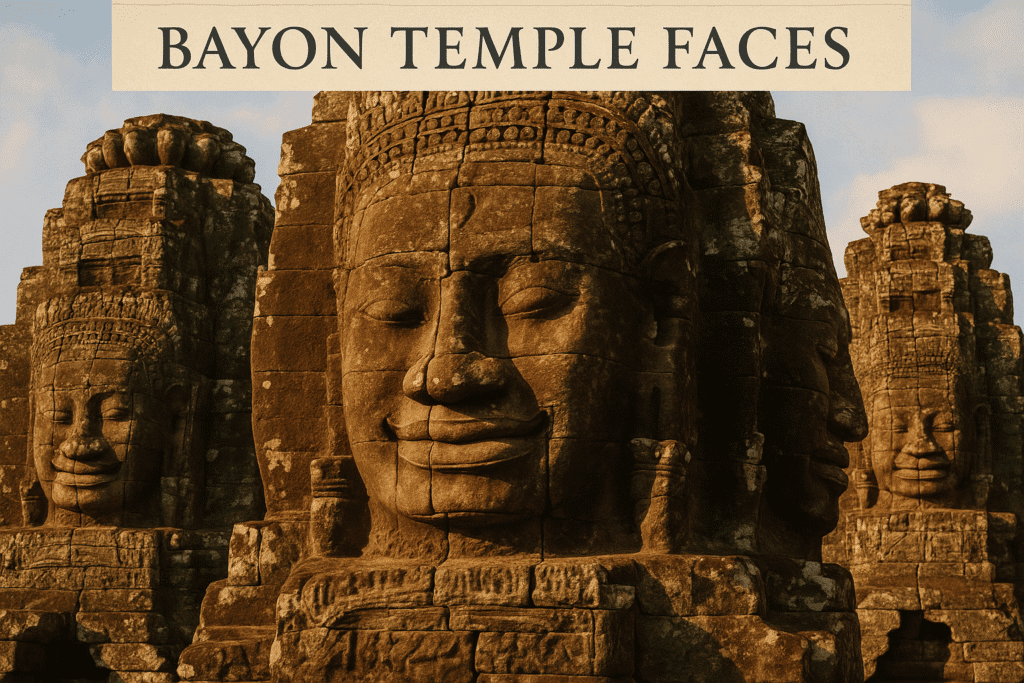
- The centre of politics and culture is Phnom Penh.
- The entrance to the magnificent temple complexes of Angkor is Siem Reap.
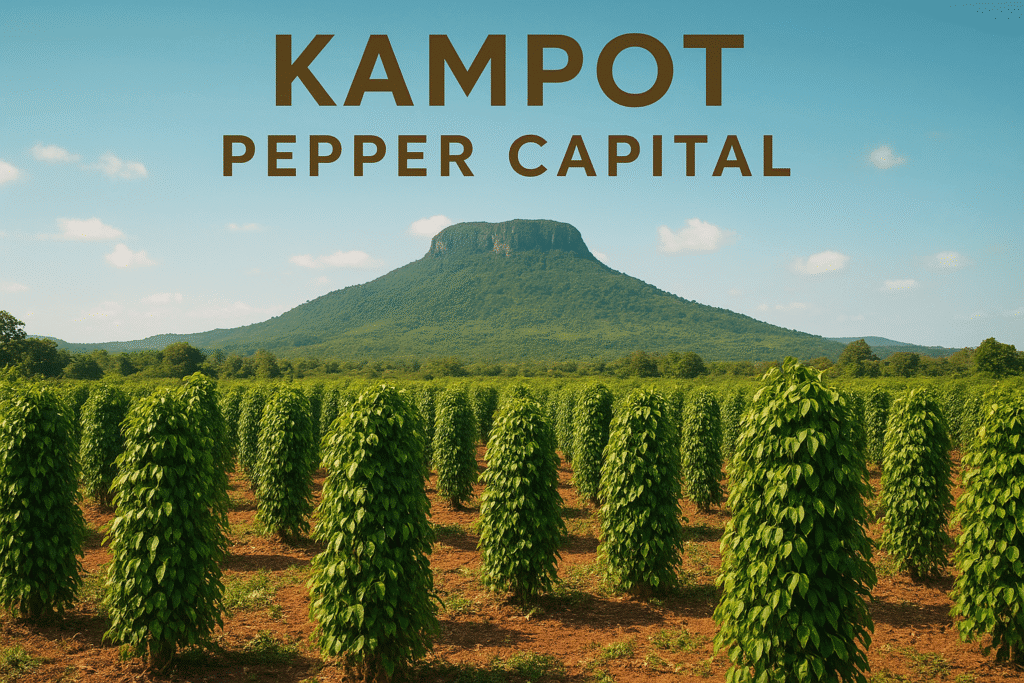
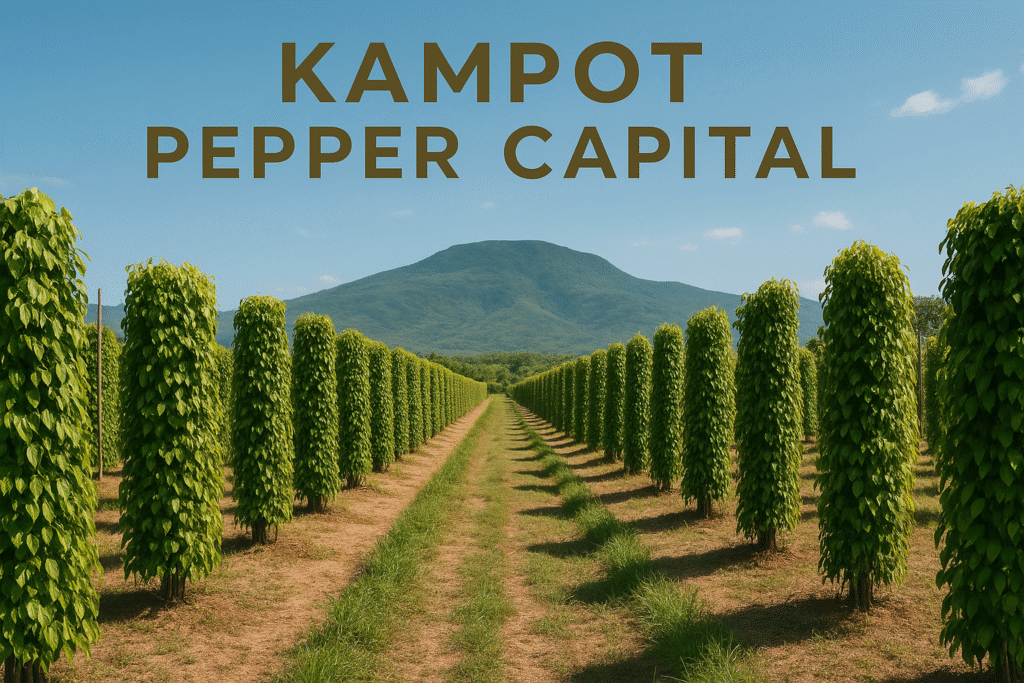
- Each of Battambang, Sihanoukville, Kampot, and Kampong Cham offers distinctive local character and landscapes. (Wikipedia).
Best Times to Visit and Transportation Options
While the wet season (May–October) offers lush scenery, the dry season (November–April) provides the best travel conditions. Domestic flights, buses, tuk-tuks and boats via the Tonlé Sap and Mekong river systems are available modes of transportation.
Final Summary
Cambodia beckons with its fusion of legacy, tenacity, and forward motion, from the timeless sweep of Angkor’s stone spires to the heart of contemporary development. Cambodia offers a profound journey that bridges the past and present, whether you travel there for its temples, food, lively festivals, or new opportunities.
Table of Key Facts
| Key Fact | Details |
| Country | Cambodia |
| Capital | Phnom Penh |
| Area | ~181,035 km² (UNdata) |
| Population (2024) | ~17.64 million (Statistics Times, UNdata) |
| GDP (2024) | US $29.5 billion (UNdata) |
| GDP per capita (2024) | US $1,760 (UNdata) |
| Key Sectors | Agriculture ~23.7%, Industry ~40.3%, Services ~36% (UNdata) |
| Tourism Arrivals (2024) | ~6.7 million (Wikipedia) |
| Official Language | Khmer (Wikipedia) |
| UN Membership | 14 December 1955 (UNdata) |
| Currency | Riel (KHR), widely uses US $ (UNdata) |
| LDC Graduation Target | By 2027 (Wikipedia) |
| New Airports | Siem Reap (2023), Phnom Penh’s Techo Intl. (2025) (Wikipedia) |
Economy, Currency, Trade Partners & Key Industries
Economic Growth & Outlook
Between 1995 and 2019, Cambodia’s GDP grew by an average of 7.6% annually, driven by exports, real estate, construction, and tourism. (World Bank).
The UN estimates that in 2024, GDP was around $29.5 billion, with a per capita income of roughly $1,759 (UNdata).
Cambodia’s economy recovered from the COVID-19 setback, growing 3.0% in 2021 and an estimated 4.8% in 2022. (BTI 2024). By 2024, industry will make up about 40.3% of GDP, followed by agriculture at roughly 23.7% and services at about 36%. (UNdata, Wikipedia).
Currency & Trade Partners
Although the US dollar (USD) is widely used in daily transactions and commerce, the Riel (KHR) is the country’s official currency. (UNdata, Wikipedia). China, the United States, Vietnam, and Thailand are Cambodia’s top trading partners. The country imports a lot of goods, including machinery, automobiles, petroleum, and clothing intermediates. (Ministry of Foreign Affairs).
Tourist Attractions: Natural, Historic, & Cultural Gems
Tourism on the Rise
In 2024, Cambodia received more than 6.7 million foreign visitors, a 22.9% increase over the year before. (AP News, Wikipedia).
Key Destinations & Historic Sites
- With its breathtaking temple ruins from the Khmer Empire, Angkor Wat and the Angkor Archaeological Park continue to be the top attractions.
- The Royal Palace, the Silver Pagoda, and moving monuments like the Killing Fields and Tuol Sleng Museum can all be found in Phnom Penh.
- Coastal getaways: Sihanoukville, Kep, Koh Rong, and Koh Rong Samloem offer serene islands and golden beaches.
- Eco-adventures: Experience ethnic minority villages and waterfall trails in the Mondulkiri and Ratanakiri jungles.
New Infrastructure Enhancing Access
In order to facilitate travel to Angkor Wat, the Siem Reap–Angkor International Airport opened in 2023. It currently handles 7 million passengers, with plans to grow to 12 million by 2040. (AP News).
In the meantime, Techo International Airport, which is close to Phnom Penh, is scheduled to soft open in July 2025 with the goal of handling up to 13 million passengers a year at first, growing to 50 million by 2050.(AP News).
Official Languages & Dialects
More than 95% of people speak Khmer, the official language, which is written in its own script.(CIA, UNdata).
Chinese, Vietnamese, and Cham are minor languages. English is becoming more prevalent in business and tourism, while French is still used in some areas of education.(CIA, Wikipedia).
Unique & Interesting Facts
- Angkor Wat is a building that is distinctively featured on the national flag of Cambodia.
- The largest freshwater lake in Southeast Asia is sustained by the Tonlé Sap River, which reverses flow seasonally.
- The Mekong River is home to the endangered Irrawaddy dolphin, which is found in Cambodia.
- Its community structure is still primarily rural, with approximately 96.2% of the population being Khmer, followed by minorities of Cham, Chinese, and Vietnamese.(nis.gov.kh, CIA).
- By 2027, the nation is expected to no longer be classified as a Least Developed Country (LDC). (The United Nations in Cambodia).
Cambodia’s Global Memberships
- Since December 14, 1955, the UN has had a full member.(UNdata).
- UNESCO, the World Bank, ASEAN, the WTO (since 2003), and a number of UN agencies (Ministry of Foreign Affairs, Wikipedia).
Major Cities & Capital Snapshot

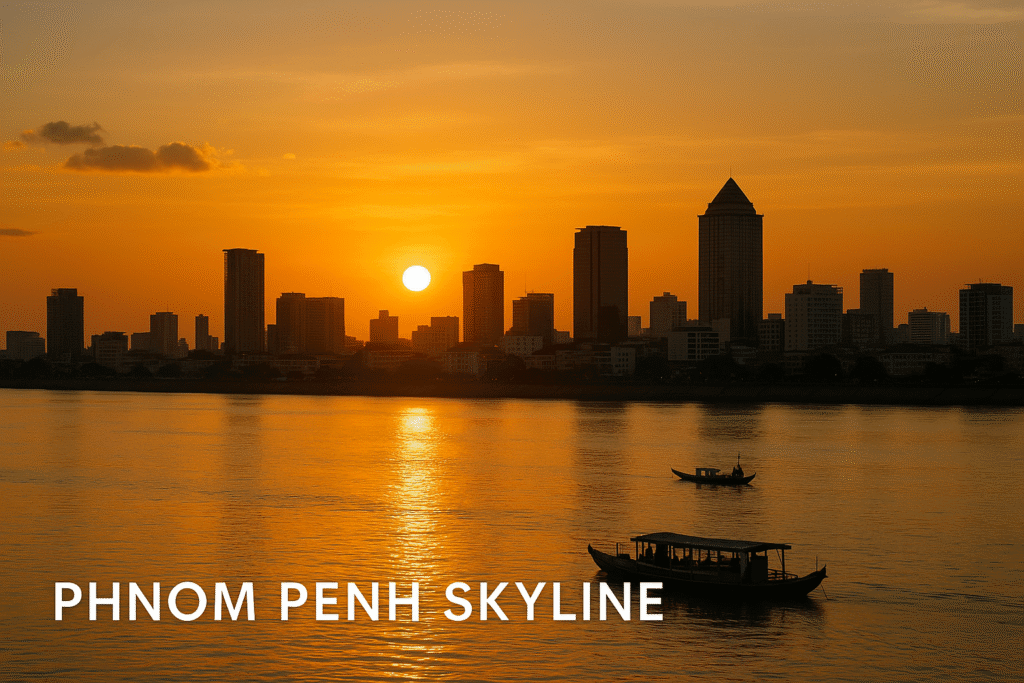
- With its museums, palaces, and bustling riverfronts, Phnom Penh is the political, cultural, and economic centre of the country.
- The entryway to Angkor, Siem Reap, is bustling with nightlife, markets, and tourists.
- Other well-known cities that offer distinctive regional cultures and local flavours include Battambang (colonial charm), Sihanoukville (beach hub), Kampot, and Kampong Cham.
Best Times to Visit & Transportation
- Ideal period: Sunny days and pleasant humidity are available during the dry season, which runs from November to April. Although it brings frequent showers, the wet season (May to October) creates lush landscapes and is ideal for nature lovers who want to avoid crowds.
- Getting around Cambodia:
- Air: Phnom Penh, Siem Reap, and Sihanoukville are connected by domestic flights; two significant new airports will soon be added.
- Road: By bus, taxi, tuk-tuk, and moto-taxi; although rural routes are still susceptible during the rainy season, road conditions are getting better.
- Water: On the Mekong and Tonlé Sap, ferries and boats offer convenient and picturesque modes of transportation.
Final Summary
Cambodia, Ancient temples, lively customs, and contemporary advancements all coexist in this historically rich and resilient land. Travellers, investors, and students are invited to join Cambodia as it unfolds its story, from the timeless spires of Angkor Wat to the soulful festivals, from economic growth through textiles and tourism to ambitious infrastructure building.
Table of Key Facts
| Key Fact | Details |
| Country | Cambodia |
| Capital | Phnom Penh |
| Area | ~181,035 km² (IMUNA | NHSMUN | Model UN, UNdata) |
| Population (2024 est.) | ~17.64 million (UNdata) |
| GDP (2024 est.) | US$29.5 billion (UNdata) |
| Per Capita Income | US$1,759 (UNdata) |
| Main Economic Sectors | Industry ~40.3%, Services ~36%, Agriculture ~23.7% (UNdata, Wikipedia) |
| Tourism (2024 arrivals) | 6.7 million (Wikipedia, AP News) |
| Official Language | Khmer (95%+) (CIA, UNdata) |
| UN Membership Date | 14 December 1955 (UNdata) |
| LDC Graduation Target | By 2027 (The United Nations in Cambodia) |
| New Airports (2023/2025) | Siem Reap–Angkor (2023), Techo International (2025) (AP News) |
Visit More:
- Afghanistan 👈
- Albania 👈
- Algeria 👈
- Andorra 👈
- Angola 👈
- Antigua and Barbuda 👈
- Argentina 👈
- Armenia 👈
- Australia 👈
- Austria 👈
- Azerbaijan 👈
External Reference Links for Cambodia Blog
- UN Data – Cambodia Country Profile
A comprehensive page offering Cambodia’s 2024 demographics, GDP, economy sectors, capital, and key indicators.
UNdata - World Bank – Cambodia Overview
Insightful economic context, growth history, recovery trends, and future projections for Cambodia.
World Bank - World Bank – Cambodia in Open Data
Hands-on data portal for GDP, population, GNI, and other development indicators over time.
World Bank Open DataDataBank - UN Data – Cambodia Statistics Portal
Access to a database of demographic, social, trade, and environmental indicators for Cambodia.
UNdata+1 - Wikipedia – Economy of Cambodia
Overview of Cambodia’s economic challenges and opportunities, with references to global partnerships.
Wikipedia - World Bank Climate Knowledge Portal – Cambodia
Climate profile including seasonal temperature and precipitation patterns and climate zone classification.
Climate Knowledge Portal - World Bank – Cambodia Climate Risk Country Profile (PDF)
In-depth assessment of Cambodia’s climate risks, adaptation strategies, and developmental implications.
Climate Knowledge Portal+1 - UNESCO – List of World Heritage Sites in Cambodia
Details on Cambodia’s UNESCO-listed sites including Angkor, Preah Vihear, Sambor Prei Kuk, Koh Ker, and others.
Wikipedia - Wikipedia – UNTAC (UN Transitional Authority in Cambodia)
Background on the UN mission that facilitated peace, elections, and nation-building in the early 1990s.
Wikipedia - Wikipedia – Foreign Relations of Cambodia
Overview of Cambodia’s diplomatic ties, including links to its foreign affairs ministry and regional integration.
Wikipedia



[…] 30.Cambodia: Ancient Wonders, Culture & Modern Growth […]