


Introduction to Chile
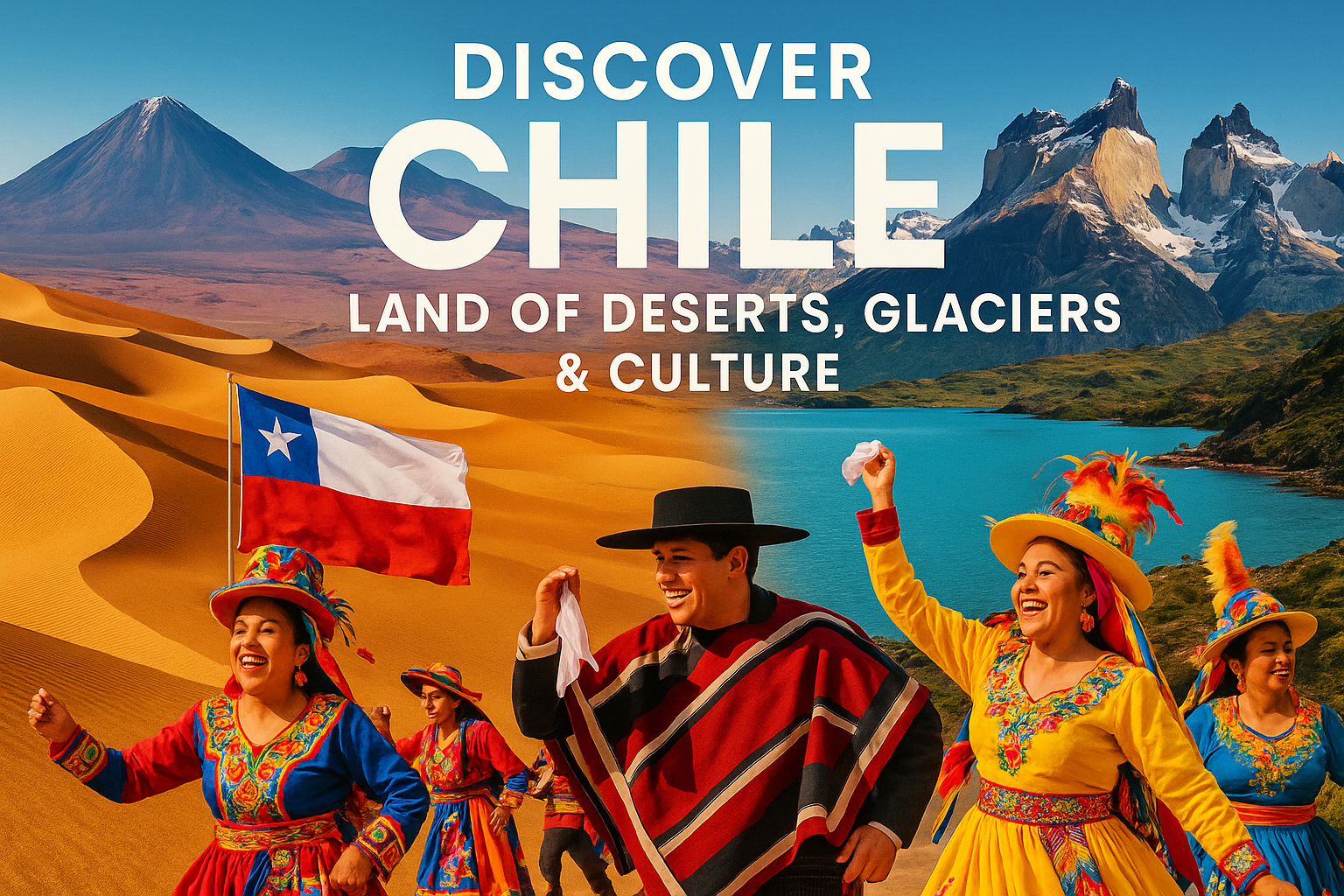
One of South America’s most intriguing nations, Chile is renowned for its distinct topography, lively culture, extensive history, and booming economy. Chile is frequently referred to as a “long and narrow ribbon of land” that stretches between the Andes Mountains and the Pacific Ocean along the western edge of the continent. Chile offers a remarkable variety of landscapes, from the world’s driest desert to enormous glaciers and verdant wine valleys, making it a popular destination for tourists, academics, and investors.
We will cover every aspect of Chile in this extensive blog post, including its history, customs, economy, major cities, tourist attractions, and travel advice. This comprehensive guide covers every facet of Chile, whether you’re planning a trip there, studying its geography, or just learning about its culture.
Historical Overview of Chile
Chile’s history dates back thousands of years, starting with the pre-colonial indigenous civilisations.
Pre-Colonial Period
- Different parts of Chile were home to indigenous groups like the Mapuche, Aymara, and Atacameño.
- Among the most important groups are the Mapuche, who are renowned for their tenacious traditions that continue to influence Chilean culture to this day and their resistance to foreign invaders.
- People have inhabited northern Chile for over 10,000 years, according to archaeological evidence, especially in the Andes highlands and Atacama Desert.
Spanish Colonization (16th Century)
- Chile’s capital, Santiago, was established in 1541 by Spanish conquistador Pedro de Valdivia.
- As a colony that provided valuable minerals and agricultural products, Chile joined the Spanish Empire.
- Long-lasting conflicts resulted from the Mapuche people’s centuries-long resistance to Spanish dominance despite colonisation.
Independence (19th Century)
- Chile started its fight for independence in the early 1800s, influenced by movements for independence throughout South America.
- Fiestas Patrias, or Independence Day, is observed today to commemorate Chile’s first act of independence, which was announced on September 18, 1810.
- Under the leadership of José de San Martín and Bernardo O’Higgins, Chile finally gained full independence from Spain in 1818 after years of conflict.
Modern History (20th–21st Century)
- Chile went through periods of political unrest in the 20th century, such as the General Augusto Pinochet-led coup in 1973.
- In addition to repression, the 1973–1990 dictatorship brought about economic reforms that helped to shape modern Chile.
- Chile has become one of the most stable and prosperous countries in Latin America since regaining its democracy in 1990.
Geographical Location of Chile
One of the world’s most geographically distinctive nations is Chile.
Location & Coordinates
- South America is the continent.
- Latitude and Longitude: 33.4489° S, 70.6693° W (the capital, Santiago)
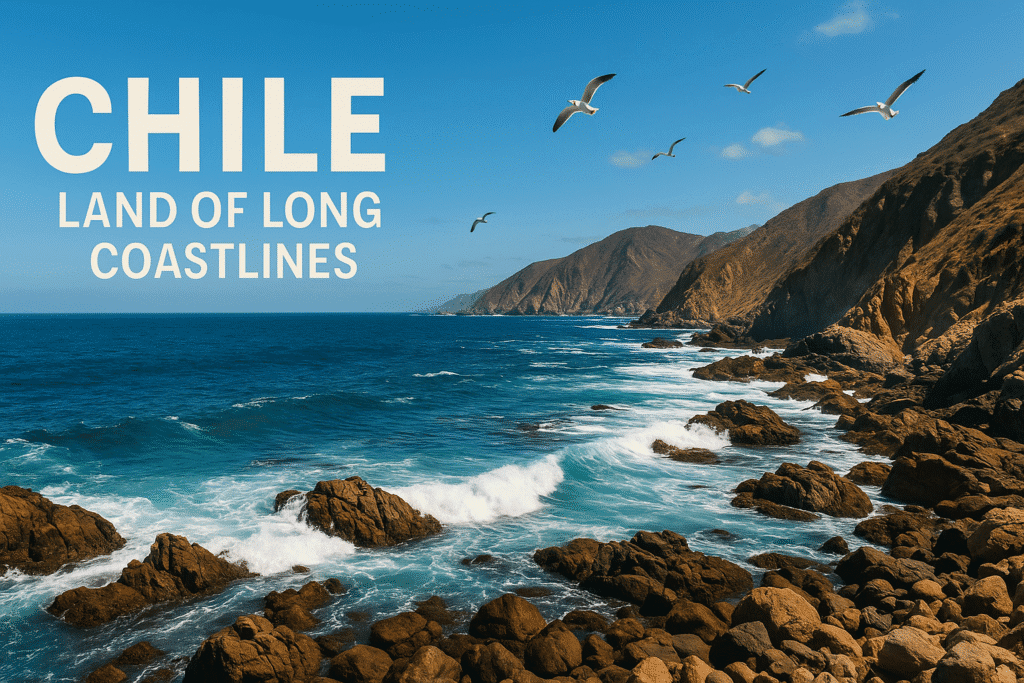
- Chile is only 177 kilometres (110 miles) wide on average, but it spans more than 4,300 kilometres (2,670 miles) from north to south.
Borders
- North: Peru
- Northeast: Bolivia
- East: Argentina
- West: Pacific Ocean
Unique Geography
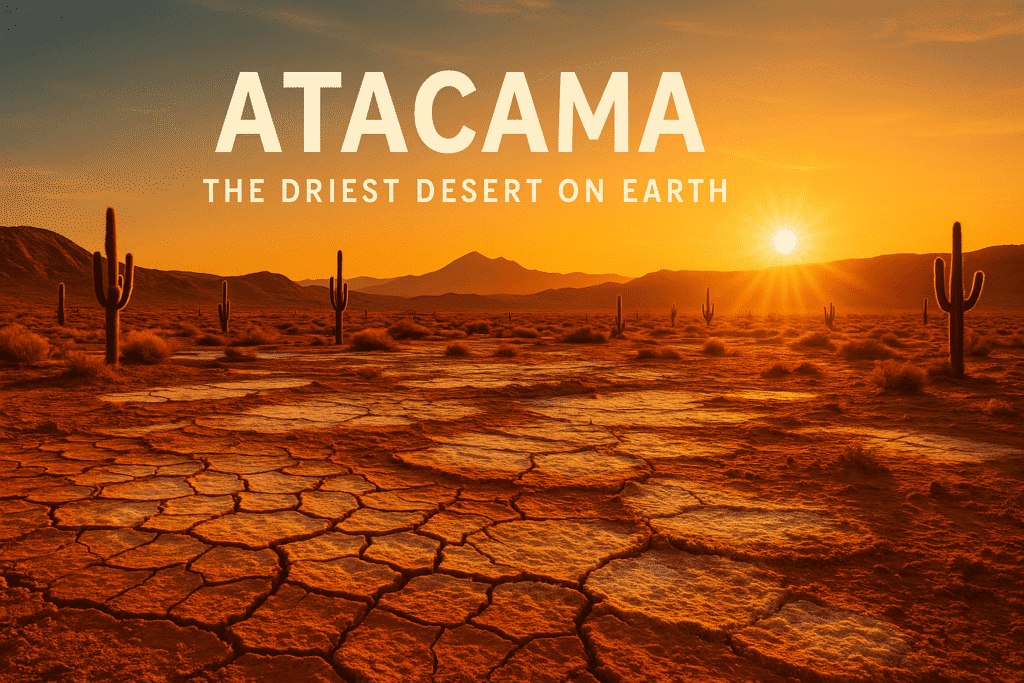
- Atacama Desert: Northern Chile is home to the world’s driest desert.
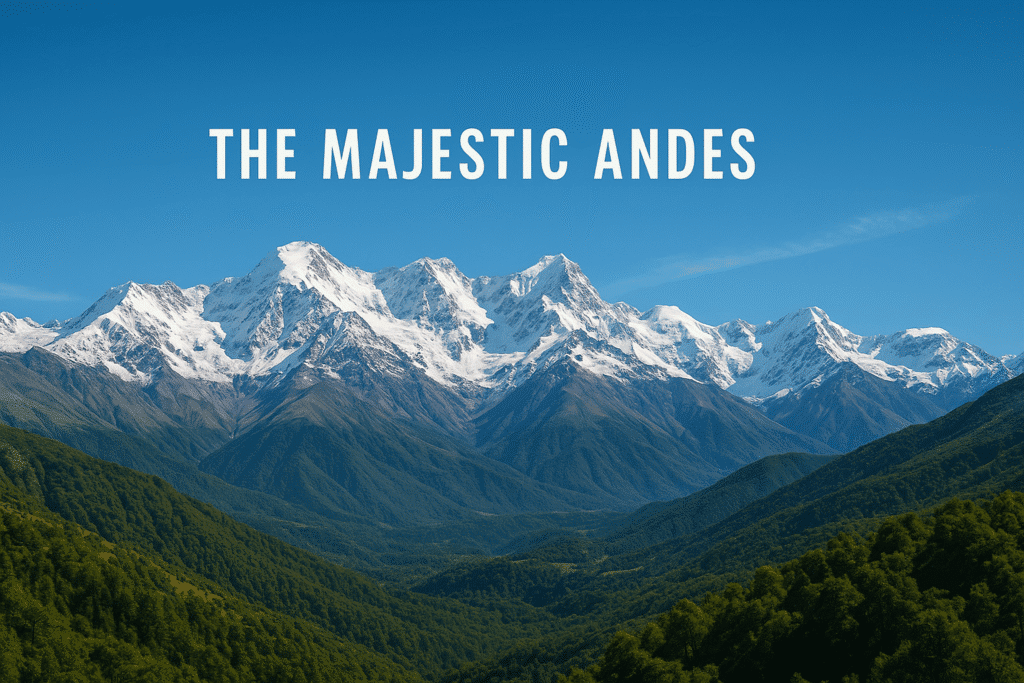
- Andes Mountains: tower over Argentina’s natural border to the east.
- Patagonia & Glaciers: Fjords, ice fields, and stunning natural beauty can be found in southern Chile.
- Easter Island (Rapa Nui): Part of Chile, this isolated Pacific island is well-known for its enormous Moai statues.
Cultural Insights into Chile
Chilean culture is a synthesis of Spanish colonial influence, indigenous customs, and contemporary international elements.
Religion & Beliefs
- The majority religion is Christianity, with Catholicism being the most popular.
- Protestantism, Judaism, and the growing number of citizens who are not religious are examples of other religions.
Festivals & Traditions
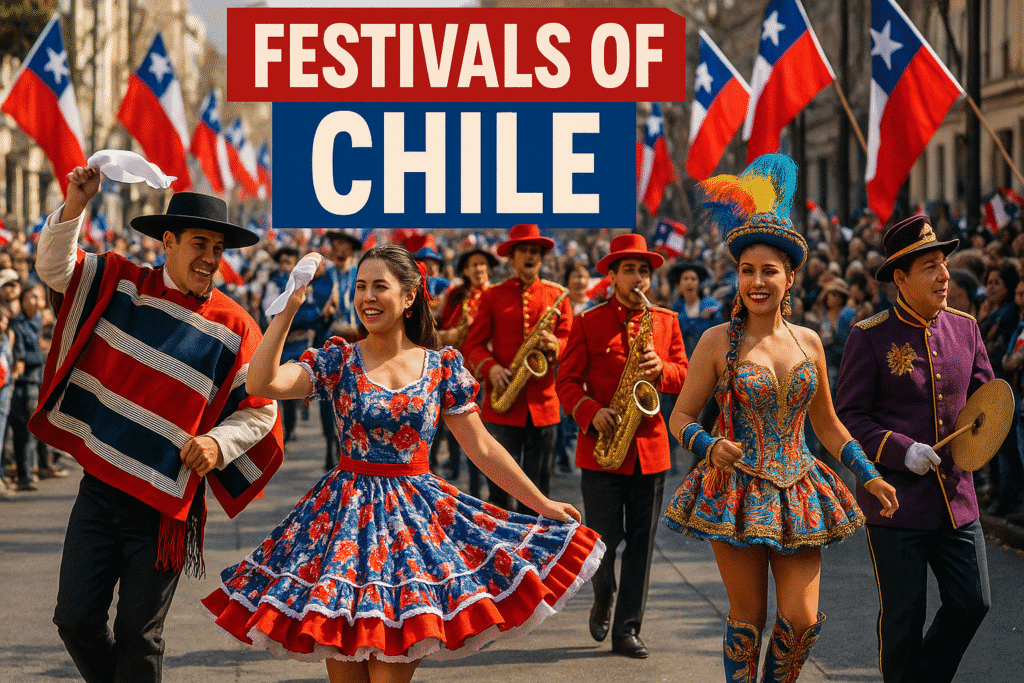
- Fiestas Patrias (September 18–19): Parades, traditional dances, and rodeos are all part of Chile’s Independence Day festivities.
- La Tirana Festival: a vibrant religious and cultural celebration with music, dance, and costumes in northern Chile.
- New Year at Valparaíso: renowned for its spectacular Pacific coast fireworks display.
Music & Dance
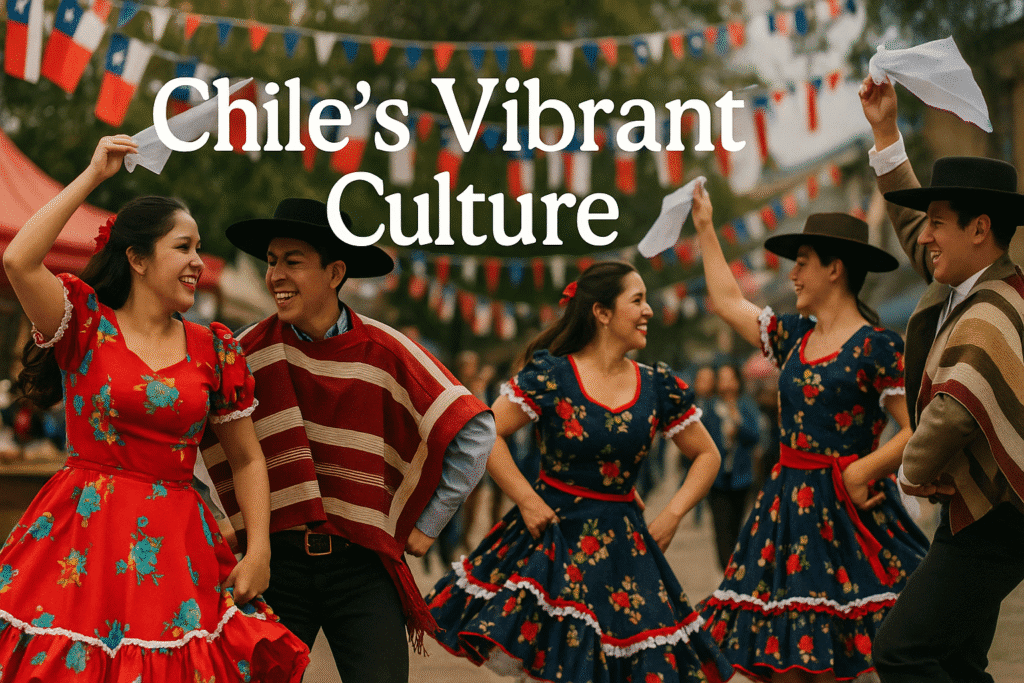
- Cueca: The national dance of Chile, which represents a man and a woman’s courtship, is frequently performed on Independence Day.
- Cultural identity is greatly influenced by folk music performed on guitars, accordions, and harps.
Chilean Cuisine
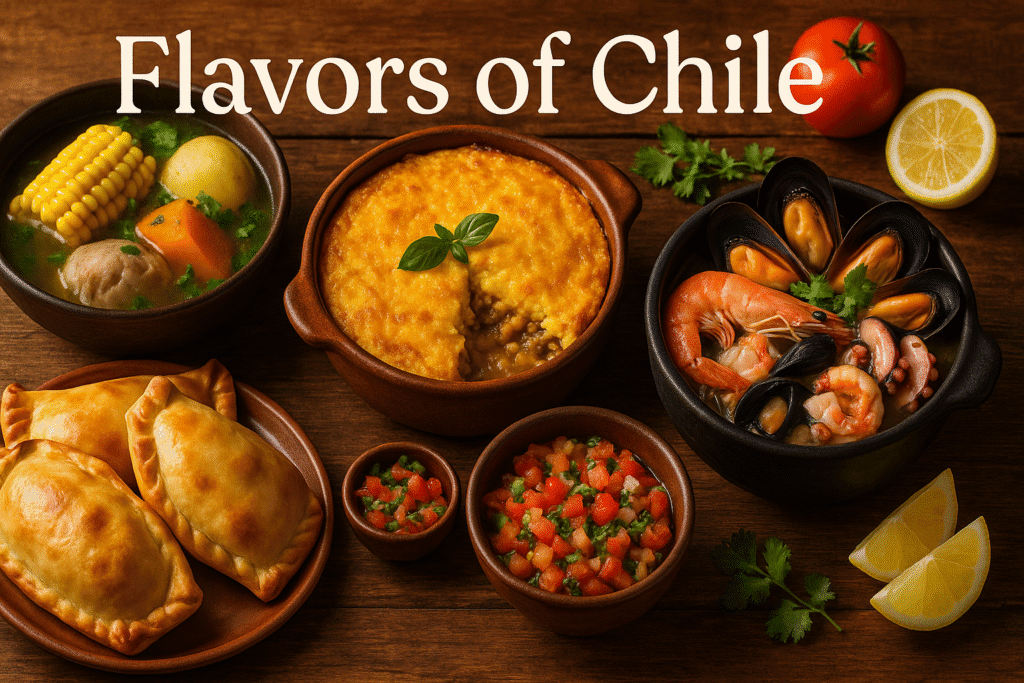
- Empanadas: Pastry stuffed with olives, onions, and meat.
- Completo: A hot dog prepared Chilean-style with mayonnaise, avocado, and tomato.
- Asado: shared barbecue customs with other nations in South America.
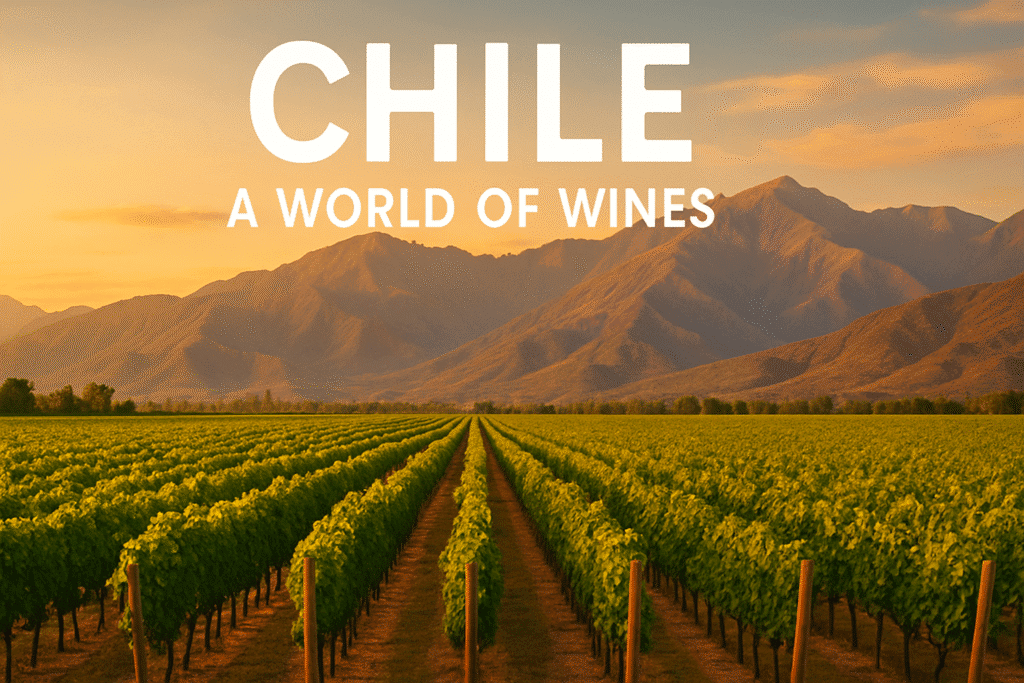
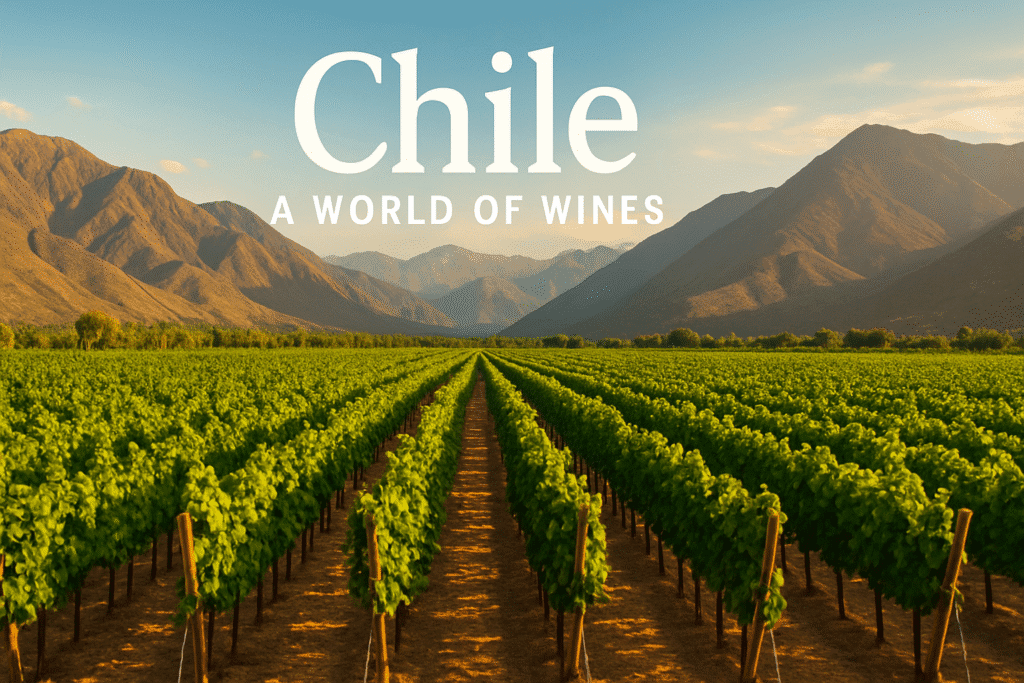
- Chilean Wine: renowned throughout the world for its superior quality, particularly from the Colchagua Valley and Central Valley areas.
- Seafood: Chile is well-known for its conger eel stew (caldillo de congrio) and fresh shellfish because of its extensive coastline..
Economy of Chile
Chile has one of the most robust and stable economies in Latin America. With a focus on international trade and a free-market philosophy, Chile has established itself as a regional leader in economic development.
Currency
- The Chilean Peso (CLP) is Chile’s official currency.
- Although U.S. dollars may occasionally be accepted in tourist destinations, it is widely used throughout the nation.
Economic Strengths
- Mining Industry
- With over 25% of the world’s copper production, Chile is the biggest producer in the world.
- Gold, silver, molybdenum, and lithium (used in batteries) are additional minerals.
- Agriculture & Exports
- Fruit production and vineyards are supported by Chile’s fertile valleys.
- Wine, grapes, apples, pears, avocados, salmon, and forestry products are among the main exports.
- Energy & Innovation
- Solar energy production thrives in the Atacama Desert.
- In an effort to become a leader in renewable energy, Chile is also funding green hydrogen projects.
- Trade Partners
- Leading partners include the European Union, Brazil, South Korea, Japan, China, and the United States.
- Chile is a party to several trade agreements, such as the Comprehensive and Progressive Agreement for Trans-Pacific Partnership (CPTPP) and the Pacific Alliance.
Economy in Global Rankings
- Chile is categorised as a high-income nation by the World Bank.
- Its economy is among the most competitive in Latin America.
Languages of Chile
Although Spanish is the official language and the most commonly spoken language in Chile, the Chilean dialect differs from standard Castilian Spanish due to its own accents, idioms, and slang.
Official Language
- Spanish (Chilean Spanish)
- renowned for its rapid tempo and distinctive pronunciation.
- Locals use many idiomatic expressions and frequently omit the final “s.”
Indigenous Languages
- The Mapuche people speak Mapudungun.
- Aymara: Said in the northern areas close to Peru and Bolivia.
- Rapa Nui: Easter Island’s indigenous language.
- These languages are being preserved by cultural revival movements, despite the fact that fewer people speak them now.
Commonly Spoken Foreign Languages
- English: taught in schools and is commonly used in business and tourism settings.
- German: Due to immigration in the 19th century, it is still spoken in southern Chile.
Major Cities of Chile
Both vibrant contemporary cities and quaint historic towns can be found in Chile.
1. Santiago (Capital)
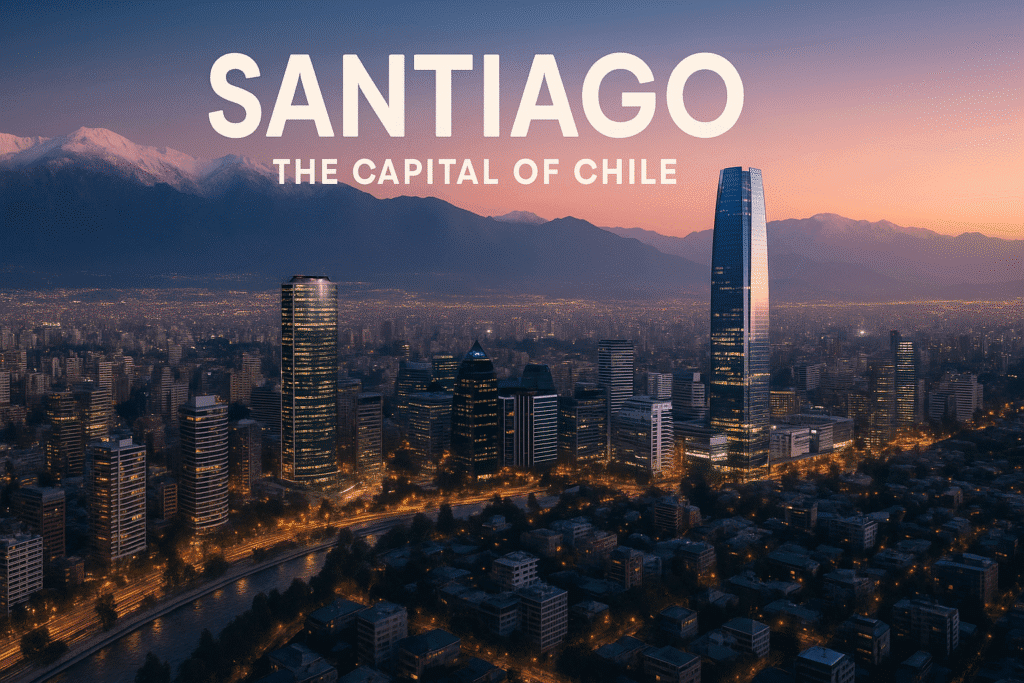
- More than 6 million people live there.
- Chile’s financial, cultural, and political centre.
- Highlights include the Museo Chileno de Arte Precolombino, Cerro San Cristóbal, Plaza de Armas, and La Moneda Palace.
2. Valparaíso
- referred to as Chile’s cultural capital.
- renowned for its historic port (UNESCO World Heritage Site), murals, and colourful hillside homes.
- hosts the biggest New Year’s fireworks festival in the world.
3. Concepción
- a significant centre for education and industry.
- renowned for its universities and contribution to Chile’s music industry.
4. Antofagasta
- It is a major port and mining city in the north.
- The Atacama Desert’s entrance.
5. Punta Arenas
- In the north, it is a significant port and mining city.
- The entrance to the Atacama Desert.
6. Easter Island (Hanga Roa)
- Easter Island’s main town.
- renowned for its Moai statues and Polynesian culture.
Chile’s Role in Global Organizations
Chile actively participates in global cooperation, trade, and international diplomacy.
Memberships in Global Organizations
- Chile joined the United Nations (UN) as a founding member in 1945.
- Organisation for World Trade (WTO)
- Chile is the first nation from South America to join the Organisation for Economic Co-operation and Development (OECD).
- International Monetary Fund (IMF) and World Bank
- South American Union of Nations (UNASUR)
- Pacific Alliance (with Peru, Colombia, and Mexico).
Chile’s participation in these groups is a reflection of its dedication to democracy, free trade, and development on a global scale.
Interesting Facts About Chile
Chile stands out from other nations because of its many unexpected and distinctive characteristics.
- Longest Country in the World
- Chile is the world’s longest north-to-south country, spanning more than 4,300 kilometres.
- Chile is the world’s longest north-to-south country, spanning more than 4,300 kilometres.
- Atacama Desert
- It is the driest desert on Earth, with some areas experiencing centuries without rain.
- It serves as a testing ground for NASA’s Mars missions.
- Home of the Giant Moai
- The Moai stone statues on Easter Island remain one of the greatest mysteries of ancient civilisations.
- Wine Excellence
- Chile is one of the top ten nations in the world for wine production.
- Chile is one of the top ten nations in the world for wine production.
- Penguins in Chile
- Chile is home to a variety of penguin species, including those found in the Magdalena Islands.
- Chile is home to a variety of penguin species, including those found in the Magdalena Islands.
- Earthquake Capital
- Chile’s location on the Pacific Ring of Fire makes it one of the world’s most earthquake-prone countries.
- It was the site of the biggest known earthquake in 1960, with a magnitude of 9.5.
- Lakes and Volcanoes
- Southern Chile is home to the stunning Lake District, which is filled with lakes, forests, and volcanoes.
- Southern Chile is home to the stunning Lake District, which is filled with lakes, forests, and volcanoes.
Top Tourist Attractions in Chile
Chile’s stunning variety of landscapes and attractions make it one of the most diverse travel destinations in South America.
1. Atacama Desert
- The planet’s driest desert, featuring moon-like terrain, salt flats, and geysers.
- A must-see are the Valle de la Luna (Valley of the Moon) and the El Tatio Geysers.
2. Torres del Paine National Park (Patagonia)
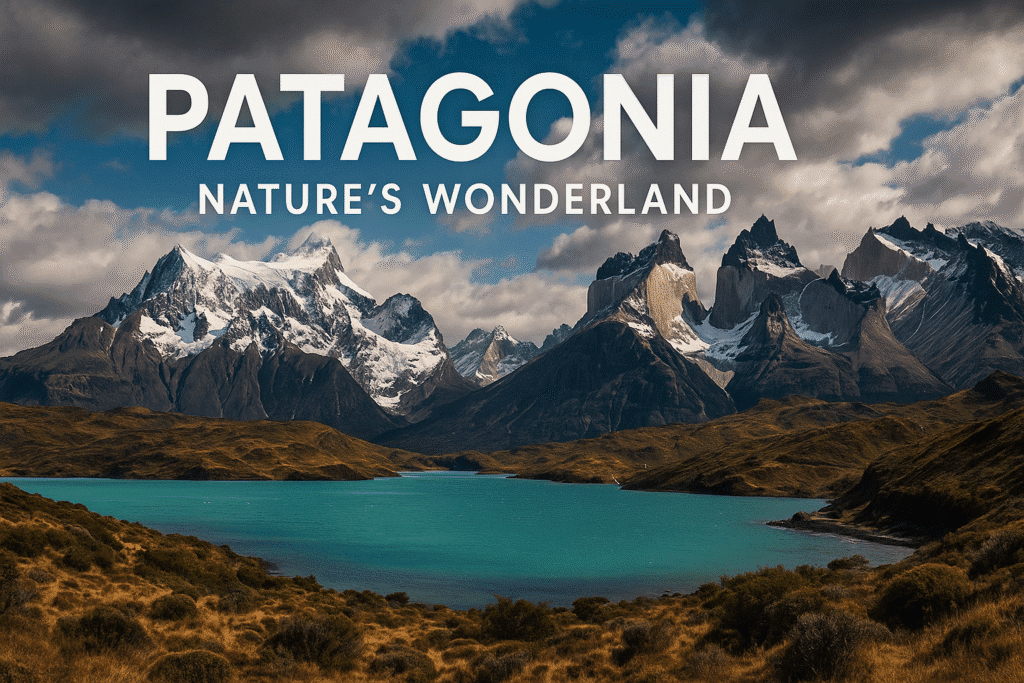
- UNESCO Biosphere Reserve.
- renowned for its turquoise lakes, glaciers, and striking mountains.
- Perfect for photography, hiking, and wildlife observation.
3. Easter Island (Rapa Nui)
- renowned for its enigmatic Moai statues.
- a fusion of Chilean and Polynesian traditions.
- Activities include diving, horseback riding, and cultural tours.
4. Santiago
- a multicultural metropolis featuring museums, historic landmarks, and contemporary skyscrapers.
- Near wine valleys and ski resorts (Valle Nevado, Portillo).
5. Valparaíso
- Known for its vibrant port area and colourful murals, this city is considered Chile’s artistic hub.
- recognised as a World Heritage Site by UNESCO.
6. Chilean Lake District
- A picturesque area with lakes, volcanoes, and towns with German influences.
- Osorno and Puerto Varas are well-known cities.
7. Chiloé Island
- renowned for its distinctive mythology and wooden churches (UNESCO heritage).
- renowned for its stilt houses, or palafitos.
8. Punta Arenas & Antarctic Gateway
- A city in the south that is frequently the starting point for Antarctic cruises.
- provides Patagonian scenery and penguin colonies.
Best Time to Visit Chile
Because of its vast geography, Chile’s climate differs from region to region.
- Summer (December – February): Best for Patagonia, Torres del Paine, and beaches.
- Autumn (March – May): Perfect for city exploration and wine tours.
- Winter (June – August): Excellent for Andean skiing.
- Spring (September – November): Ideal for hiking and the Atacama Desert’s wildflower bloom.
👉 Depending on your travel objectives, October through March is the ideal time of year to visit Chile.
How to Travel Around Chile
For both domestic and foreign visitors, Chile boasts a sophisticated infrastructure.
Transportation Options
- Air Travel: Major cities and Easter Island are connected by LAN Airlines and Sky Airline.
- Buses: Most regions are connected by long-distance options, which are both economical and comfortable.
- Trains: Restricted but picturesque, particularly in the south and around Santiago.
- Car Rentals: Perfect for road trips in the Lake District and Patagonia.
- Metro: The metro system in Santiago is among the most advanced in South America.
Final Summary
From the world’s driest desert to the frozen landscapes of Patagonia, Chile is a country of contrasts. Its history, which was influenced by colonialism and indigenous heritage, melds well with contemporary customs and culture. Chile is more than just a place to visit; it is a country that embodies resiliency, beauty, and advancement. It is economically robust, internationally connected, and culturally dynamic.
Chile offers every visitor an experience they won’t soon forget, whether they are drawn to its UNESCO sites, distinctive wines, historic cities, or stunning natural wonders.
Quick Key Facts About Chile
| Feature | Details |
| Official Name | Republic of Chile |
| Capital City | Santiago |
| Continent | South America |
| Official Language | Spanish |
| Currency | Chilean Peso (CLP) |
| Population | ~19.5 million |
| Major Industries | Mining, Agriculture, Tourism, Wine, Energy |
| Neighboring Countries | Peru, Bolivia, Argentina |
| UN Membership | Since 1945 (Founding Member) |
| Tourist Highlights | Atacama Desert, Torres del Paine, Easter Island, Valparaíso |
| Best Time to Visit | October – March |
Official & Tourism Resources
- Chile Travel – Official Tourism Site
Discover Chile’s varied landscapes and get ideas for trips to all of its regions. Excellent for trip planning, cultural exploration, and visitor information.Chile Travel
Economic Data & Analysis
- World Bank – Chile Overview
offers current reports on Chile’s economy and fiscal health, as well as macroeconomic insights and development indicators.World Bank+1
Cultural & Heritage References
- UNESCO – Chilean Intangible Cultural Heritage
explains initiatives to protect Chile’s intangible cultural heritage, such as the Mapuche and Quinchamalí pottery traditions..dataviz.unesco.orgunesco.org - Chile Travel – World Heritage Sites
highlights Chile’s UNESCO World Heritage sites, including the Churches of Chiloé, Rapa Nui, and the Humberstone nitrate mines.Chile Travel
Government & Culture
- Gob.cl – Government of Chile Portal
The Chilean government’s official online portal for national information, policies, and public services.Wikipedia
Mining History
- Humberstone & Santa Laura Saltpeter Works (Wikipedia)
comprehensive history of the saltpetre industry and Chile’s economic legacy through its UNESCO-listed ghost towns.Wikipedia
Visit More:
A
- Afghanistan 👈
- Albania 👈
- Algeria 👈
- Andorra 👈
- Angola 👈
- Antigua and Barbuda 👈
- Argentina 👈
- Armenia 👈
- Australia 👈
- Austria 👈
- Azerbaijan 👈
B
12. Bahamas 👈
13. Bahrain 👈
14. Bangladesh 👈
15. Barbados 👈
16. Belarus 👈
17. Belgium 👈
18. Belize 👈
19. Benin 👈
20. Bhutan 👈
21. Bolivia 👈
22. Bosnia and Herzegovina 👈
23. Botswana 👈
24. Brazil 👈
25. Brunei 👈
26. Bulgaria 👈
27. Burkina Faso 👈
28. Burundi 👈



[…] 35.Chile – A Complete Guide to History, Culture, Geography, and Tourism […]