



Introduction
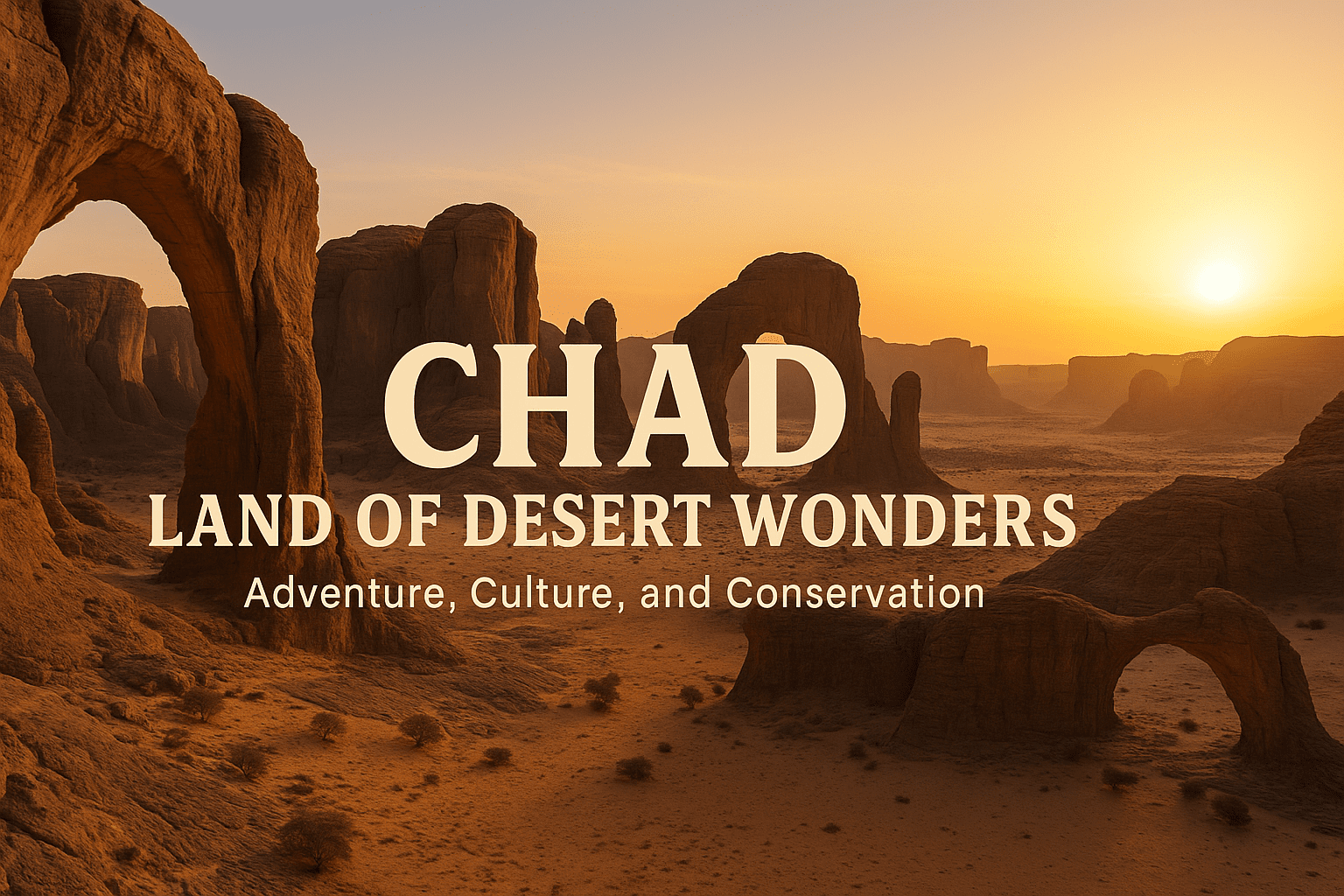
North-central Africa is home to the landlocked nation of Chad, formally known as the Republic of Chad. Chad provides an intriguing fusion of history, customs, and scenic beauty. It is well-known for its expansive deserts, distinctive cultural legacy, and abundant biodiversity. Chad is a place that is just waiting to be discovered, from the stunning Ennedi Plateau to the busy streets of N’Djamena. Chad’s fascinating blend of landscapes and customs will enthral you whether you’re a tourist, historian, or cultural enthusiast.
History of Chad
Early History
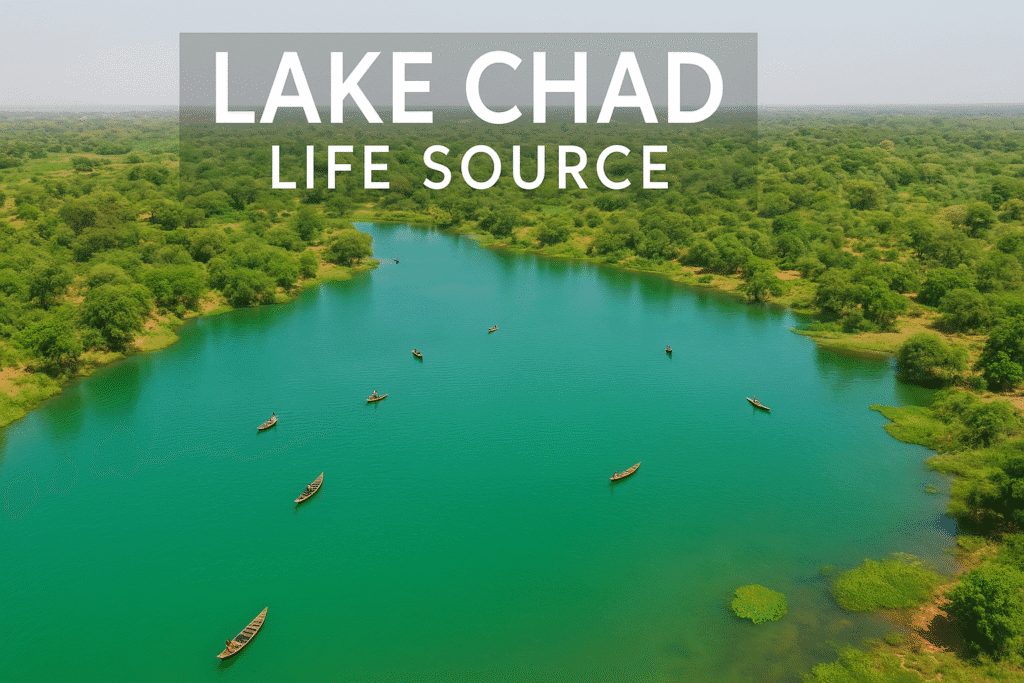
With evidence of ancient civilisations flourishing around Lake Chad, archaeological findings indicate that human settlements in Chad date back to prehistoric times. The first people to live there were hunters, gatherers, and nomadic herders. The Kanem Empire began to take shape around 700 AD and grew to become a significant trading and political force in the area.
Kanem-Bornu Empire
From the eighth to the nineteenth centuries, the Kanem-Bornu Empire was one of the most powerful nations in Central Africa. By facilitating the trade of salt, gold, ivory, and slaves between sub-Saharan Africa and North Africa, it was an essential part of the trans-Saharan economy.
Colonial Era
Chad was colonised by France in the late 19th century, and in 1920 it was formally incorporated into French Equatorial Africa. Although local tribes opposed the French administration, it brought about improvements in infrastructure, education, and governance.
Independence and Modern History
On August 11, 1960, Chad became independent of France, and its first president was François Tombalbaye. Nonetheless, political unrest, disputes, and civil wars have characterised post-independence history. The multiethnic republic of Chad is currently striving for both political stability and economic growth.
Geographical Location of Chad
North-central Africa is home to Chad, the continent’s fifth-largest nation. It is surrounded by:
- North: Libya
- East: Sudan
- South: Central African Republic
- West: Cameroon, Nigeria, and Niger
Location: roughly at latitude 15°N and longitude 19°E.
There are three primary zones in Chad’s geography:
- The Tibesti Mountains and arid terrain predominate in the Northern Sahara Desert.
- The semi-arid Central Sahel region is ideal for cattle grazing.
- The majority of Chad’s population lives in the fertile southern savanna zone.
Climate and Best Time to Visit
The climate of Chad varies widely:
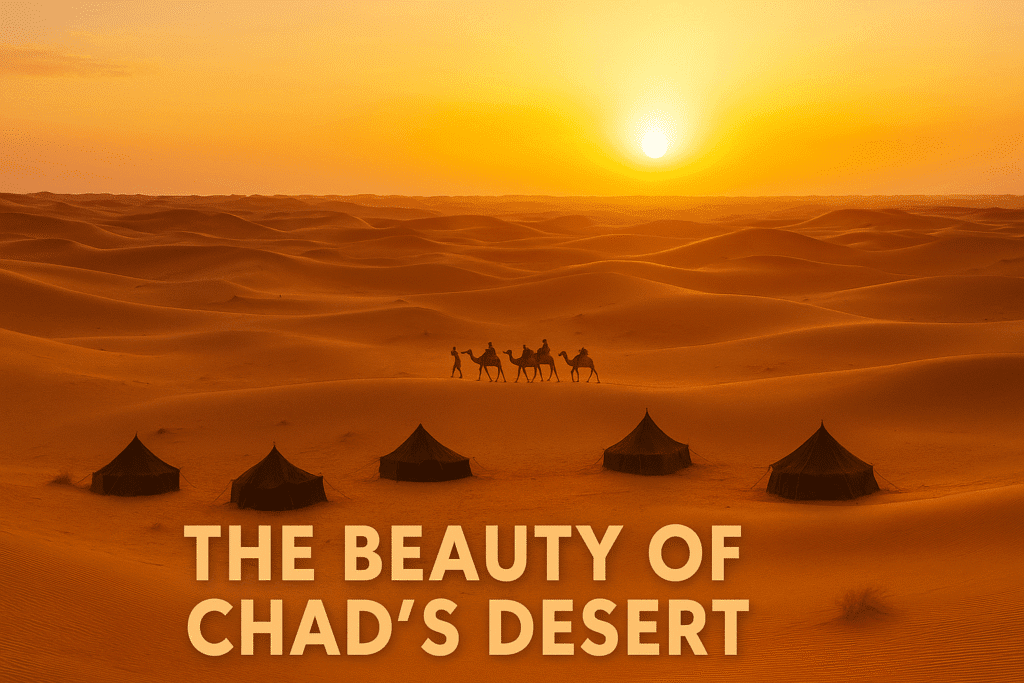
- North: A scorching desert with little precipitation.
- Central: Short rainy seasons and semi-arid climate.
- South: More regular rainfall in a tropical savanna climate.
November through February are the best months to go because of the milder, more travel-friendly weather.
Cultural Insights of Chad
Ethnic Diversity
There are more than 200 ethnic groups in Chad. Among the principal groups are:
- Sara (south)
- Arabs (center and north)
- Kanembu (west)
- Toubou (north)
Religion
- The predominant religion in the north is Islam.
- In the south, Christianity is very common.
- They also adhere to indigenous beliefs.
Festivals
- The Wodaabe people have a traditional courtship ritual called the Gerewol Festival.
- August 11 is Independence Day, a national holiday marked by parades and cultural events.
Music & Dance
Common traditional instruments include the balafon (xylophone) and kundi (harp). Arab influences are mixed with African rhythms in music.
Food
- Common foods include grilled meats, peanut-based sauces, millet porridge, and boule (maize or sorghum paste).
- Popular beverages include bili-bili, a millet beer from the area, and tea, which is widely consumed.
Culture and Traditions of Chad
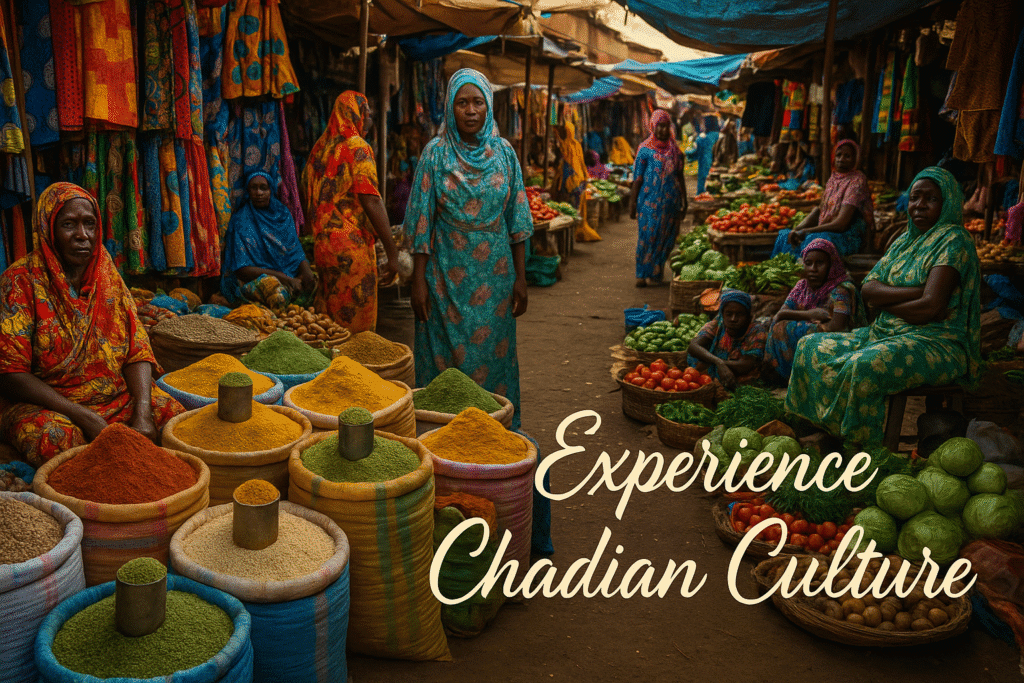
Because of its varied ethnic groups, long history, and geographic location, Chad has a vibrant mosaic culture. There are more than 200 ethnic groups in the nation, and each one has its own traditions, languages, and customs.
Ethnic Diversity
- Sara: Mostly found in the south, this group is distinguished by its vibrant clothing and customs centred around agriculture.
- Arab: Mostly found in the north and centre, where nomadic lifestyles and Islamic heritage have an influence.
- Famous for their historical ties to the Kanem-Bornu Empire are Kanembu and Kanuri.
- Toubou: Saharan nomadic herders known for their ability to persevere in the face of adversity.
Religion
Chad’s identity is strongly influenced by religion:
- Islam: Approximately 55% of people, particularly in the north and centre, practise it.
- Christianity: roughly 40% of the population, mostly in the south.
- Indigenous Beliefs: In rural areas, it is still practiced and frequently combined with major religions.
Festivals
- August 11 is Independence Day, a national holiday commemorating Chad’s 1960 independence from France.
- The Gerewol Festival is a vibrant Wodaabe celebration that includes traditional dances and ornate costumes.
- Muslim communities observe Ramadan and Eid al-Fitr by fasting, praying, and sharing meals together.
- Christian communities celebrate Christmas and Easter with church services and other events.
Music and Dance
African rhythms, Arabic melodies, and French influences can all be heard in Chadian music. Common traditional instruments include drums, flutes, and the kinding, a kind of harp. Pop, hip-hop, and Afrobeat are all incorporated into modern music.
Cuisine
French, Arab, and African culinary traditions are all mixed together in Chad’s cuisine culture:
- Bouillie: A sorghum or millet-based porridge.
- Daraba is a stew made with meat and vegetables.
- Shanks of slow-cooked beef, known as “jarret de boeuf,” are frequently served with rice.
- dishes made with fish, particularly tilapia and perch from Lake Chad.
- Tea or millet beer (bili bili) are frequently served with meals.
Economy of Chad
Although Chad’s economy is growing, it still faces obstacles because of its landlocked location, poor infrastructure, and unstable political system. It does, however, contain abundant natural resources.
Key Economic Facts
- GDP: $12.8 billion (World Bank, 2024 estimate)
- Currency: Central African CFA franc (XAF)
- Main Industries:
- Oil Production – Primary source of export revenue.
- Agriculture – Millet, sorghum, cotton, and livestock.
- Fishing – Especially from Lake Chad.
- Mining – Gold and uranium reserves.
- Oil Production – Primary source of export revenue.
- Trade Partners:
- China (oil exports)
- Cameroon (export transit)
- France
- Nigeria
- Sudan
- China (oil exports)
Economic Challenges
- Because of its heavy reliance on oil, the economy is susceptible to changes in its price globally.
- restricted variety.
- limitations in infrastructure and instability in the region.
Tourist Attractions in Chad
Despite not being a popular travel destination, Chad offers distinctive experiences due to its unspoiled landscapes and rich cultural legacy.
Natural Attractions
- Zouar Mountains & Sahara Desert – Huge desert dunes and breathtaking rock formations.
- Lake Chad – An essential ecosystem for bird watching and fishing.
- Ennedi Plateau – Rock art, caves, and remarkable sandstone formations can be found at this UNESCO World Heritage site.
- Zakouma National Park – Elephants, lions, giraffes, and more than 300 bird species can be found in this wildlife sanctuary.
Historical & Cultural Sites
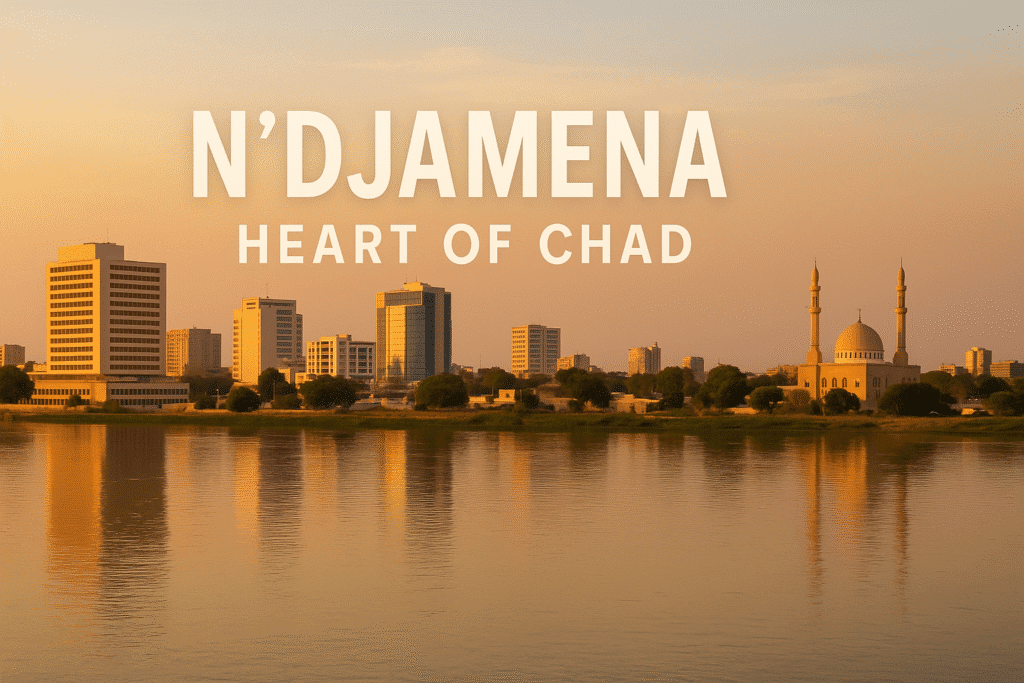
- N’Djamena National Museum – presenting the history, archaeology, and cultural artefacts of Chad.
- Guelta d’Archei – A desert oasis known for its crocodiles.
- Old Town of Abéché – renowned for its vibrant markets and historic buildings.
Languages of Chad
Chad has two official languages:
- French
- Arabic
Furthermore, more than 120 native languages and dialects are used. The following are a few of the commonly spoken local languages:
- Sara
- Ngambay
- Kanembu
- Toubou
Chad’s ethnic diversity and intricate cultural fabric are reflected in its linguistic diversity.
Tourism in Chad
A unique and thrilling trip into Africa’s undiscovered heartlands is provided by Chad. Travellers seeking authenticity and adventure are drawn to Chad because of its stunning wildlife reserves, lively cultural ceremonies, and windswept Saharan dunes. Chad’s breathtaking scenery and customs reward those who venture deeper despite its sparse tourist infrastructure.
Popular Attractions in Chad
- Elephants, lions, giraffes, and a variety of birds can all be found in Zakouma National Park, a conservation success story. Under African Parks’ protection, giraffe populations have flourished and elephant births have recovered.(Wikipedia, Financial Times)
- A geological wonder of cliffs, sandstone arches, prehistoric rock art, and unique Saharan oasis ecosystems is the Ennedi Plateau and Guelta d’Archei. Guelta d’Archei, located in northeastern Chad, is even home to the last remaining colonies of West African crocodiles.(Wikipedia, spazidavventura.com)
- The UNESCO-designated Lakes of Ounianga and Waza Massif are unique environments in Chad, shining as lush islands in the middle of the arid Sahara. (Condé Nast Traveler)
- One of Chad’s largest wildlife reserves, Ouadi Rimé–Ouadi Achim Reserve is home to Sahelian biodiversity and scimitar-horned oryx, and it features desert and grassland habitats. (Wikipedia)
- Important conservation areas that protect antelopes, cheetahs, lions, rhinos, and a variety of bird species are Siniaka-Minia and Manda National Parks. (Wikipedia)
- Binder-Léré Reserve and Gauthiot Falls are treasures in southwest Chad that include wetlands that are home to West African manatees and waterbirds. (Wikipedia)
Best Time to Visit Chad
The best time to visit Chad is during the dry season (October/November to March/April), when the scenery is milder, the roads are easier to navigate, and wildlife congregates near the few remaining waterholes. (Responsible Travel, osamtour.com, Roamopedia.com)
- Despite difficult roads, the Gerewol Festival (late September) offers a vibrant cultural spectacle. (Responsible Travel)
- Although the wet season (May to September) offers beautiful scenery and fantastic birdwatching, flooding makes travel difficult. (Roamopedia.com, travelresearchonline.com)
- April and October are transitional months that are perfect for attending festivals or having moderate transportation conditions; March and May are very hot. (Roamopedia.com, osamtour.com, spazidavventura.com)
Travel Tips & Safety in Chad
Caution, awareness, and preparation are necessary when travelling to Chad.
Safety Considerations
- Armed robbery, instability, terrorism (particularly in the vicinity of Lake Chad, the Libyan and Sudanese borders), and inadequate road security are all real security threats. (atlas-guide.com, Dancing Pandas, travelresearchonline.com)
- Registration: Within 72 hours of entering, visitors must register with the local police.(Dancing Pandas)
- Health: Yellow fever vaccination is mandatory; prophylactic treatment for hepatitis A/B, typhoid, meningitis, and malaria is advised.(travelresearchonline.com, evisa-chad.org)
Practical Travel Advice
- Planning & Access: Since Chad doesn’t see many tourists, reservations for tours and lodging should be made months in advance. Anticipate harsh realities.(Xplrverse, Dancing Pandas)
- Transport Costs: Because of the remote logistics and reliance on guides, travel in Chad is costly.(Dancing Pandas, Travellers Worldwide)
- Connectivity: Because the infrastructure outside of N’Djamena is inadequate, use local SIM cards, satellite phones, and guides.(evisa-chad.org, Dancing Pandas)
Challenges & Opportunities for Chad Tourism
Challenges
- The growth of tourism is hampered by endemic instability, inadequate infrastructure, and a poor international image.(Le Monde.fr, traveldojo.com)
- The sluggish growth of tourism is made worse by a lack of domestic travel culture and investment.(Le Monde.fr)
Emerging Opportunities
- Through influencer-led campaigns, local initiatives—particularly those of the Chad Volunteers Organization—are changing perceptions.(Le Monde.fr)
- Partnerships for conservation and ecotourism (like those in Zakouma and Siniaka-Minia) are laying the groundwork for long-term viability.(Financial Times, Wikipedia)
Final Summary
Chad is still one of Africa’s most unexplored travel destinations; its striking scenery, fascinating history, and resilient cultures make up for any drawbacks to tourism. The nation welcomes tourists looking for unique, life-changing experiences, from the Saharan sands to the watering holes of Zakouma.
Although travelling to Chad is challenging, those who are willing to push themselves beyond their comfort zones, support local conservation efforts, and interact with communities in meaningful and respectful ways will reap unparalleled benefits.
Table of Key Facts: Chad
| Feature | Details |
| Official Name | Republic of Chad |
| Capital | N’Djamena |
| Continent | Africa |
| Borders | Libya, Sudan, CAR, Cameroon, Nigeria, Niger |
| Best Time to Visit | Dry Season: Oct–Apr |
| Currency | Central African CFA franc (XAF) |
| Languages | French, Arabic (Chadian), 120+ local dialects |
| Top Highlights | Zakouma, Ennedi Plateau, Guelta d’Archei, Ouadi Rimé, Lakes of Ounianga |
| UN Membership | Since 1960 |
| Main Industries | Oil, Agriculture, Livestock |
| Popular Festivals | Gerewol, Sao Festival, National Day |
| Travel Risks | Insecurity, poor infrastructure, health precautions needing clearance |
Visit More:
A
- Afghanistan 👈
- Albania 👈
- Algeria 👈
- Andorra 👈
- Angola 👈
- Antigua and Barbuda 👈
- Argentina 👈
- Armenia 👈
- Australia 👈
- Austria 👈
- Azerbaijan 👈
B
12. Bahamas 👈
13. Bahrain 👈
14. Bangladesh 👈
15. Barbados 👈
16. Belarus 👈
17. Belgium 👈
18. Belize 👈
19. Benin 👈
20. Bhutan 👈
21. Bolivia 👈
22. Bosnia and Herzegovina 👈
23. Botswana 👈
24. Brazil 👈
25. Brunei 👈
26. Bulgaria 👈
27. Burkina Faso 👈
28. Burundi 👈



[…] 34.Chad – History, Culture, and Travel Guide […]