




🇧🇫 Burkina Faso: A Vibrant Heart of West Africa
West African landlocked Burkina Faso is renowned for its ancient history, rich cultural diversity, and friendly populace. Burkina Faso offers an immersive experience that is both real and poignant, ranging from vibrant marketplaces and lively festivals to savanna scenery and ancient kingdoms. Burkina Faso’s combination of tradition and resiliency makes it an unforgettable destination for anyone interested in culture, nature, or travel.

🏺 Historical Origins of Burkina Faso
Ancient and Pre-Colonial Roots
People have lived in Burkina Faso for thousands of years. In the eleventh and thirteenth centuries, Mossi kingdoms rose to power and established strong states like Ouagadougou, Yatenga, and Tenkodogo.(Wikipedia).
Independence and Transformation
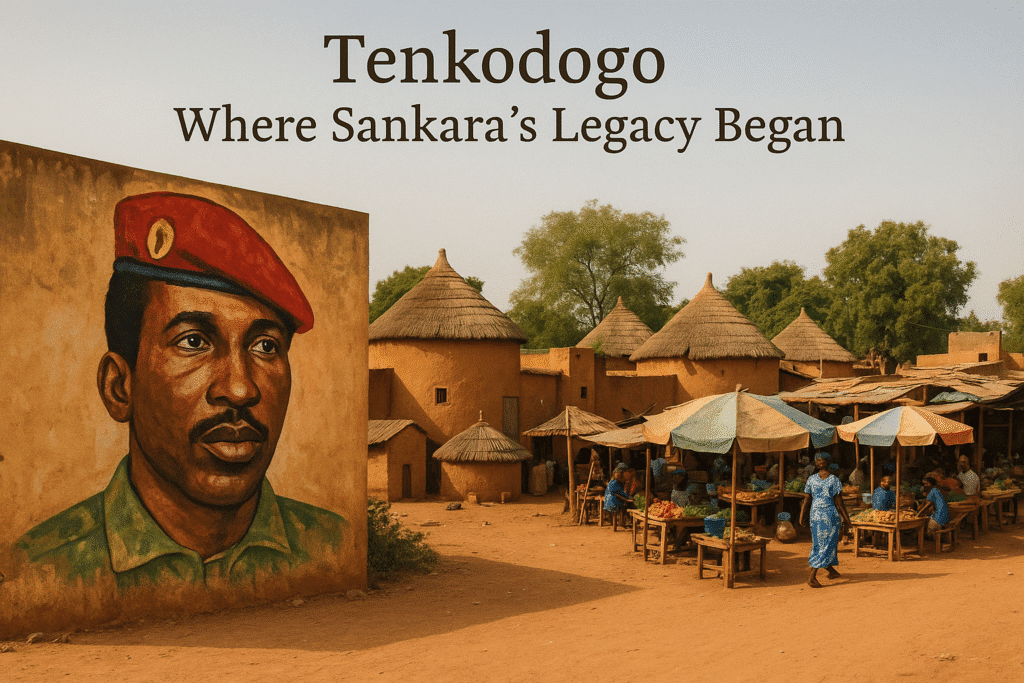
Originally called Upper Volta, the nation became independent of France in 1960. In 1984, revolutionary leader Thomas Sankara changed the name to Burkina Faso, which means “Land of Upright People.”(Wikipedia). The nation’s identity continues to be influenced by Sankara’s legacy.
Political Instability and Recent Context
More than two million people have been displaced by Burkina Faso’s numerous military takeovers since gaining independence (1966, the 1980s, and 2022) and the ongoing Islamist insurgency throughout the Sahel since 2015.(AP News, Wikipedia).
🌍 Geography & Location

Location and Borders
Burkina Faso is a landlocked country in West Africa that is bounded by:
- Benin (southeast), Togo, Ghana, Ivory Coast (south), Mali (northwest), and Niger (northeast)(CountryReports, Wikipedia).
- Coordinates: roughly 12.5° N, 1.5° W (country centre)
Area and Terrain
Burkina Faso, which covers an area of about 274,200 km2, comprises:
- The northern Sahel region consists of dry, flat savanna plains with sporadic hills.
- Tenakourou (about 749 meters) is the highest point in the west.(Worlddata.info, traveldocs.com).
Climate and Seasons
The climate varies:
- Mid-November to mid-February is the cool dry season, with nighttime lows of about 16°C.
- Mid-February through June is the hot, dry season, with daytime highs of up to 40°C.
- June through September is the rainy season, when the scenery is greener.
- Transitional period between September and mid-November(Encyclopedia Britannica).
🎭 Culture & Society
Ethnic Diversity and Languages
Burkina Faso is one of Africa’s most culturally diverse countries, home to more than 60 ethnic groups, the most significant of which are the Mossi (approximately 53%), Fulani, Gurunsi, Gourmantché, Bobo, and Tuareg.(everyculture.com).
Official language: French.
Indigenous languages that are widely spoken include Mooré, Dioula, Fula, Gourmantché, and others.(worldtravelguide.net).
Religion & Beliefs
- Islam: ~61%
- Christianity (mostly Roman Catholic): ~23%
- Traditional religions: ~8%
Burkina Faso is noted for religious coexistence and tolerance(Wikipedia).
Tradition & Cultural Events

- In even-numbered years, the most well-known mask and ritual festivals take place in late February or early March and include elaborate dance, music, and costumes.(responsiblevacation.com).
- Despite insecurity, artistic establishments such as Bobo-Dioulasso’s Ankata dance school foster local talent and provide opportunities for young people.(The Guardian).
- Despite the ongoing conflict, Ouagadougou’s Recreatrales theatre festival has grown to be an important cultural event that invites both local and displaced communities to engage in performance art.(AP News).
🌍 Geographical Location of Burkina Faso
Burkina Faso is a landlocked country in West Africa, located between latitudes 9° and 15°N and longitudes 6°W and 3°E. It shares borders with six nations:
- Mali to the north and northwest,
- Niger to the east,
- Benin to the southeast,
- Togo and Ghana to the south,
- and Côte d’Ivoire to the southwest.
Burkina Faso’s geographical diversity, which supports both agriculture and wildlife, includes savanna grasslands in the south and the Sahel region in the north, despite the country’s lack of coastline. The country’s highest point is Ténakourou Hill (749 m) in the southwest.
🧭 Coordinates:
12.2383° N, 1.5616° W
🎭 Cultural Insights into Burkina Faso
✨ Traditions and Customs
There are more than 60 ethnic groups in Burkina Faso, and each has its own customs, dances, attire, and social structures. The Mossi people are the dominant group, known for preserving their monarchical system, where the Moro Naba (emperor) still plays a ceremonial and spiritual role today.
- Every Friday in Ouagadougou, the king and his court participate in the symbolic traditional reenactment known as the Moro Naba Ceremony.
- Oral traditions and storytelling continue to play a major role in rural life.
🎶 Music and Dance
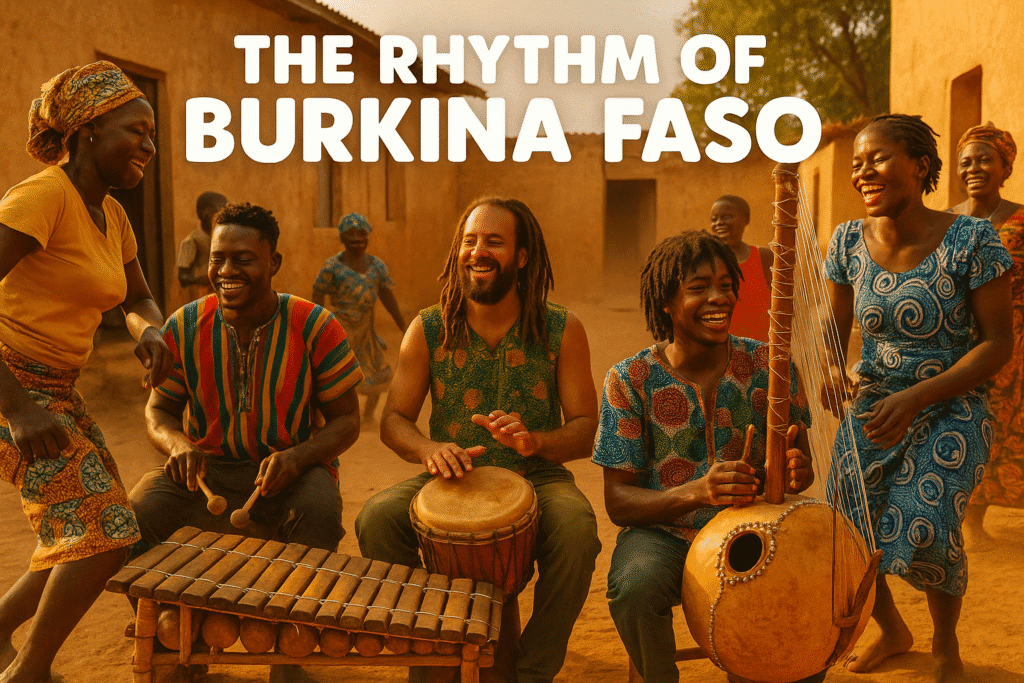
West Africa’s centre for music and art is Burkina Faso:
- Commonly used instruments include the djembe, balafon, and kora.
- Griot performances, traditional Mossi rhythms, and Afrobeat are common.
Burkinabé sounds have gained international recognition thanks to well-known musicians like Victor Démé and Amadou Balaké.
🥘 Cuisine

Traditional ingredients and agricultural staples are reflected in the national diet:
- Tô: Served with sauce (leafy greens, okra, or peanuts), this thick paste is made from millet, sorghum, or maize.
- Riz gras is a rice dish made with tomatoes, meat, and vegetables.
- Poulet bicyclette: Locally grilled chicken, frequently accompanied by mustard sauce and onions.
- Dolo: A classic beer made from sorghum or millet.
🕌 Religion and Beliefs
- With roughly 63% of the population practicing Islam, it is the most common religion.
- About 20% of people practise Christianity, primarily Catholicism.
- Particularly in rural areas, indigenous beliefs are still very strong.
Burkina Faso is known for its tolerant religion, where many communities celebrate one another’s holidays.
💱 Economic Overview of Burkina Faso
💼 Major Industries
The economy of Burkina Faso is predominantly based on agriculture, with:
- More than 80% of the workforce is employed in agriculture.
- The primary cash crop is cotton, also known as “white gold.”
- Burkina Faso is Africa’s fifth-largest producer of gold, with gold mining emerging as the main export industry in recent years.
🌍 Currency
The West African CFA franc (XOF), which is based on the euro and used in many neighbouring countries, is the official currency.
📈 Trade and Partners
Key exports:
- Gold
- Cotton
- Livestock
Main trade partners:
- Switzerland (gold)
- India
- United Arab Emirates
- Ghana
- France
🌱 Economic Challenges
- Being landlocked increases the cost of transportation.
- Agriculture is impacted by frequent droughts and desertification.
- Development and mining have been hampered by security concerns, particularly in the north and east.
Despite having a low Human Development Index, Burkina Faso has a strong economy and is backed by World Bank and IMF development initiatives.
🗺️ Tourist Attractions in Burkina Faso
Despite security advisories in some areas, Burkina Faso remains a hidden gem for adventure and cultural tourism.
🏛️ Historical & Cultural Sites
- Laongo Sculpture Symposium: A granite sculpture park featuring international artists.
- Ouagadougou’s Royal Palace of the Moro Naba.
- Bobo-Dioulasso Grand Mosque: A famous 19th-century mud-brick mosque.
- Ouagadougou’s Museum de la Musique.
🌿 Natural Wonders
- Elephants, antelopes, lions, and hippos can be found in Arli and W National Parks.
- Near Banfora, the Sindou Peaks are eroded sandstone rock formations.
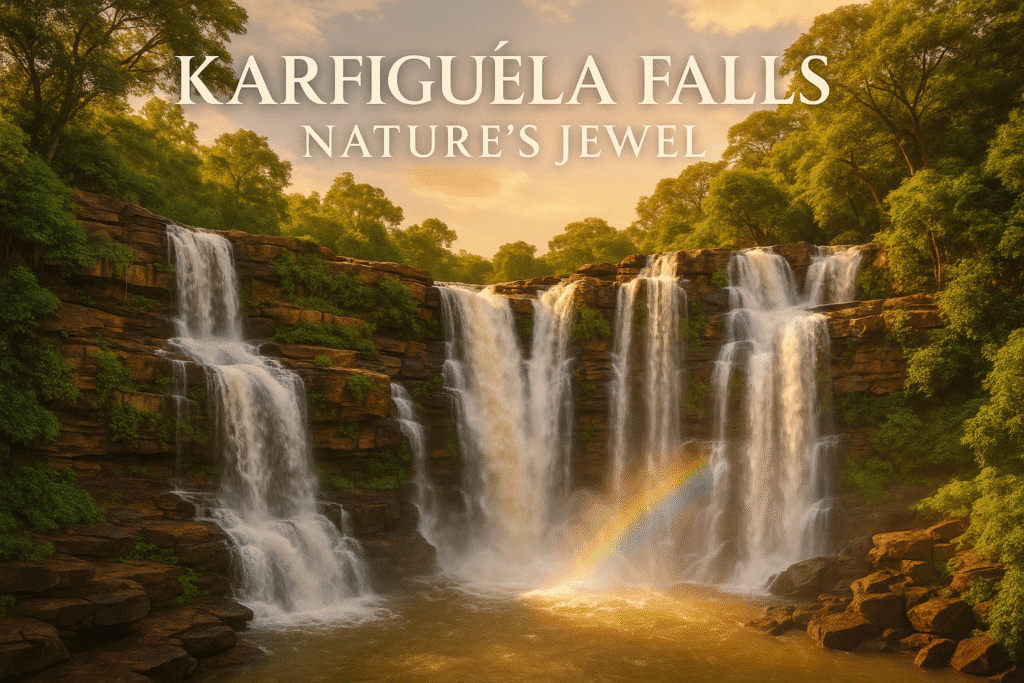
- Karfiguéla Waterfalls: Sugarcane fields encircle this picturesque waterfall.
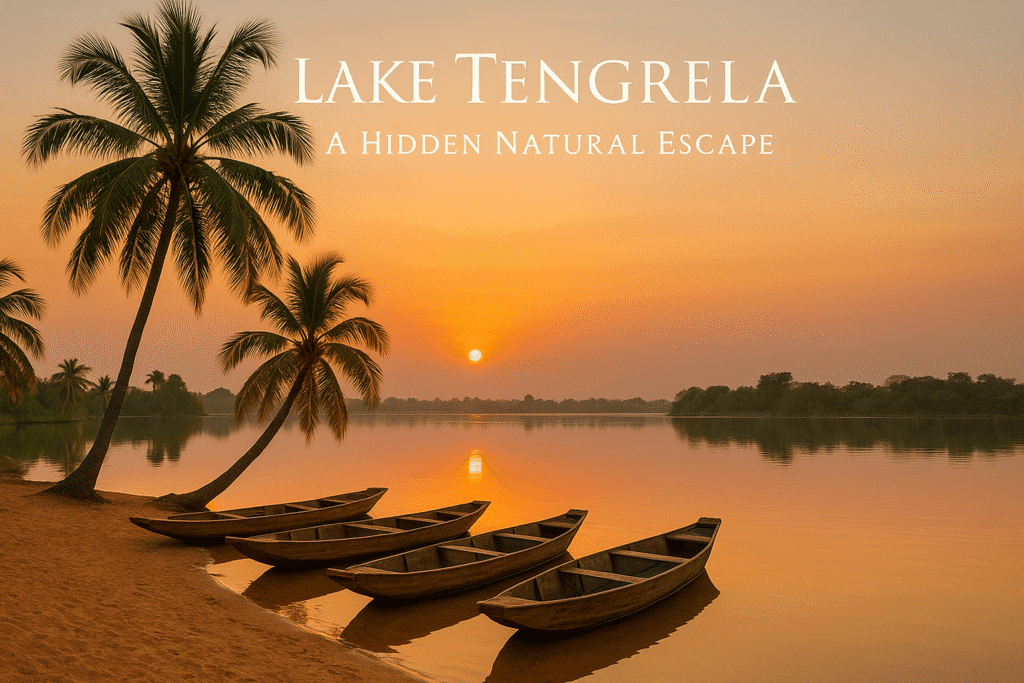
- Lake Tengrela is well-known for its sacred crocodiles and hippos.
🎭 Festivals
- One of Africa’s largest film festivals is called FESPACO (Panafrican Film and Television Festival of Ouagadougou).
- Traditional African art is promoted by SIAO (International Art and Craft Fair of Ouagadougou).
- Jazz à Ouaga is an international jazz festival that showcases musicians from around the world.
Burkina Faso’s Global Presence
Member of the United Nations and Other Organizations
Shortly after separating from France, on September 20, 1960, Burkina Faso became a member of the United Nations (UN). It actively takes part in many regional and international organisations, such as:
- The African Union (AU)
- West African Economic Community (ECOWAS)
- Organisation Internationale de la Francophonie (OIF)
- Organisation for World Trade (WTO)
- The International Monetary Fund (IMF)
- The World Bank Group
Its partnership with these groups seeks to advance economic growth, poverty alleviation, regional integration, and peace.
Major Cities of Burkina Faso
1. Ouagadougou (Capital City)
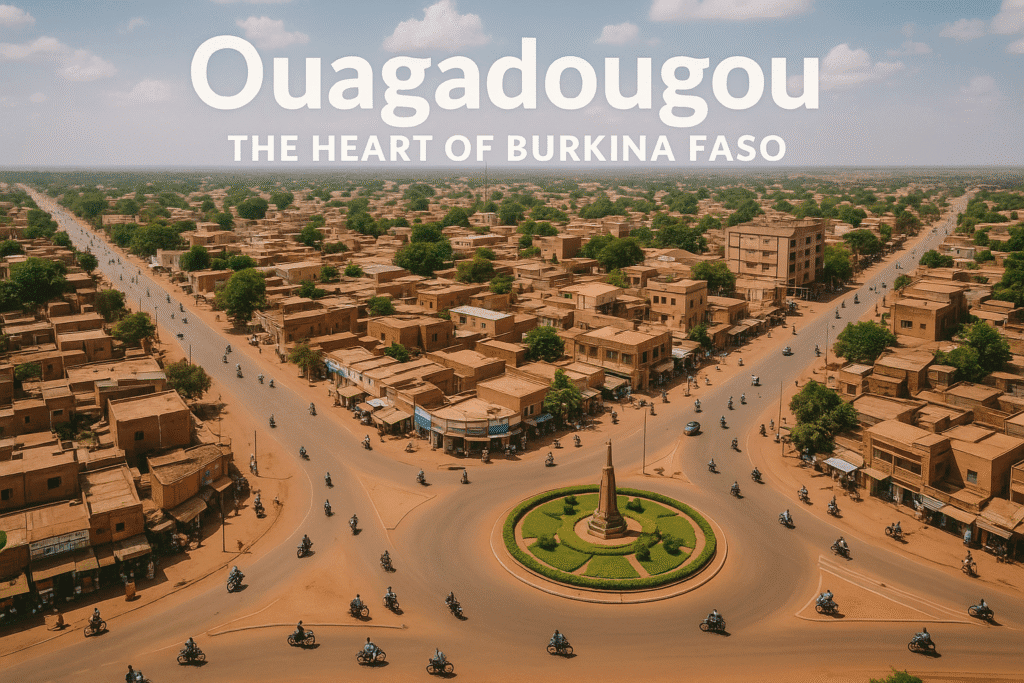
Ouagadougou, the political, cultural, and economic centre of Burkina Faso, is renowned for:
- Historical archives and national museums.
- festivals of traditional music and artisan markets.
- Memorial of Thomas Sankara.
2. Bobo-Dioulasso
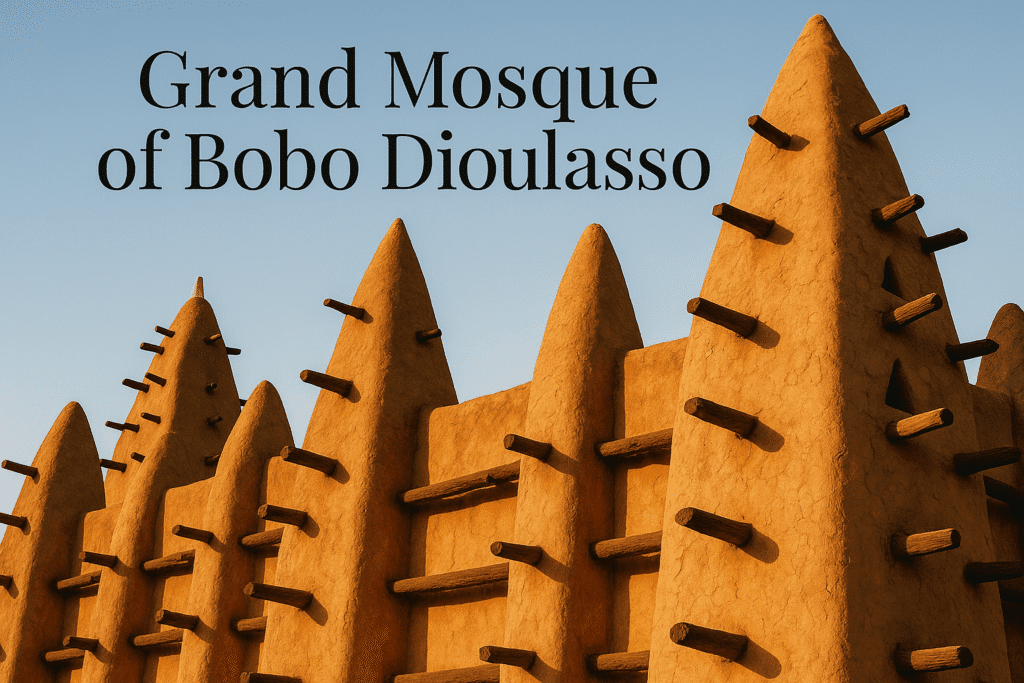
Bobo-Dioulasso, the second-largest city, is well-known for:
- An exquisite example of Sudano-Sahelian architecture is the Great Mosque of Bobo-Dioulasso.
- vibrant music culture and nightlife.
- Historical significance and a wealth of ethnic diversity.
3. Koudougou, Banfora, and Ouahigouya
In their respective regions, these expanding urban centres support commerce, agriculture, and education.
Best Time to Visit Burkina Faso
Ideal Travel Seasons
- Cooler, dry weather from November to February is perfect for touring cities and natural areas.
- Before the rainy season, March through May is a hot time to observe wildlife.
- Rainy season, which lasts from June to October, produces beautiful scenery but can also have an impact on road conditions.
Key Travel Tips
- Currency used locally: CFA Franc (XOF)
- Language: Most people speak French; it improves cross-cultural communication to learn some basic greetings in Mòoré or Dioula.
- Health: Preventing malaria is advised. You must be vaccinated against yellow fever.
How to Travel Around Burkina Faso
Transportation Methods
- In large cities, taxis are common and reasonably priced.
- Minibuses and Bush taxis: For travel between cities.
- Motorcycles are very common for commuting locally.
- Air Travel: There are domestic flights between major cities, such as Ouagadougou and Bobo-Dioulasso.
Travellers should budget for longer travel times between remote areas, even though infrastructure is getting better.
Unique and Interesting Facts About Burkina Faso
- Strong cultural values are reflected in the name, which means “Land of Incorruptible People.”
- Cinema Pioneer: The location of Africa’s biggest film festival, FESPACO.
- Artisan Culture: Known for its handcrafted fabrics and bronze sculptures.
- Drumming Heritage: The Mandé culture, which is widely practiced in Burkina Faso, is the origin of the djembe drum.
Final Summary
Burkina Faso is a nation with rich traditions, a long history, and resilient citizens. It provides an enthralling experience for tourists, researchers, and development partners alike, from its significance in West African history and distinctive cultural expressions to its abundant wildlife and artisanal skills.
Burkina Faso is a remarkable example of strength and tenacity because of its commitment to advancing through art, education, and international collaboration despite its economic difficulties.
Table: Key Facts About Burkina Faso
| Category | Information |
| Capital | Ouagadougou |
| Continent | Africa |
| Population | ~22 million (2023 est.) |
| Official Language | French |
| Currency | West African CFA Franc (XOF) |
| Major Cities | Ouagadougou, Bobo-Dioulasso, Koudougou |
| Main Religion | Islam (~63%), Christianity (~23%) |
| Independence | August 5, 1960 (from France) |
| Time Zone | GMT+0 |
| Climate | Tropical savanna, hot semi-arid |
| Tourist Attractions | Sindou Peaks, Arli National Park, FESPACO |
| UNESCO Sites | Ruins of Loropéni |
| Global Organizations | UN, AU, ECOWAS, WTO, OIF |
Visit more:
- UN Member States – Burkina Faso
(Official United Nations website verifying membership and associated data)
- World Bank – Burkina Faso Overview
(Projects, development indicators, and economic data)
- UNESCO World Heritage – Burkina Faso
(Details of Burkina Faso’s natural and cultural UNESCO sites)
- CIA World Factbook – Burkina Faso
(Details of geography, history, politics, economy, and population)
- African Development Bank – Burkina Faso
(Macroeconomic assistance and project investments)
- United Nations Development Programme (UNDP) – Burkina Faso
(Programs for governance and sustainable development)
- International Monetary Fund (IMF) – Burkina Faso
(Reports on inflation, economic outlook, and fiscal policy)
Burkina Faso Travel Advisory – Lonely Planet
(Attractions, cultural insights, and travel advice)



[…] 27.Burkina Faso: Culture, History & Travel Guide […]
[…] 27.Burkina Faso: Culture, History & Travel Guide […]
[…] 27.Burkina Faso: Culture, History & Travel Guide […]